Thinking from the bottle’s perspective.
In the PET industry, usually a finished bottle has served as the starting point for defining the geometry of a preform. But today’s challenges grow ever more complex, often involving new materials, stricter environmental requirements and ever-increasing cost pressures. A new approach is needed and AI-enhanced digital prototyping and optimising offer many advantages.
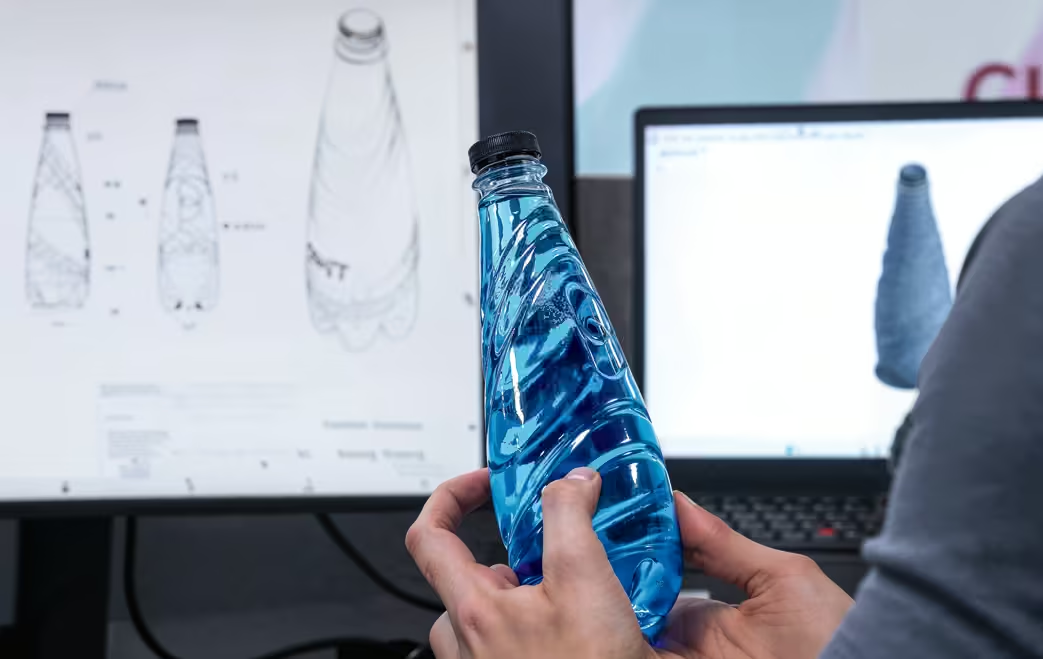
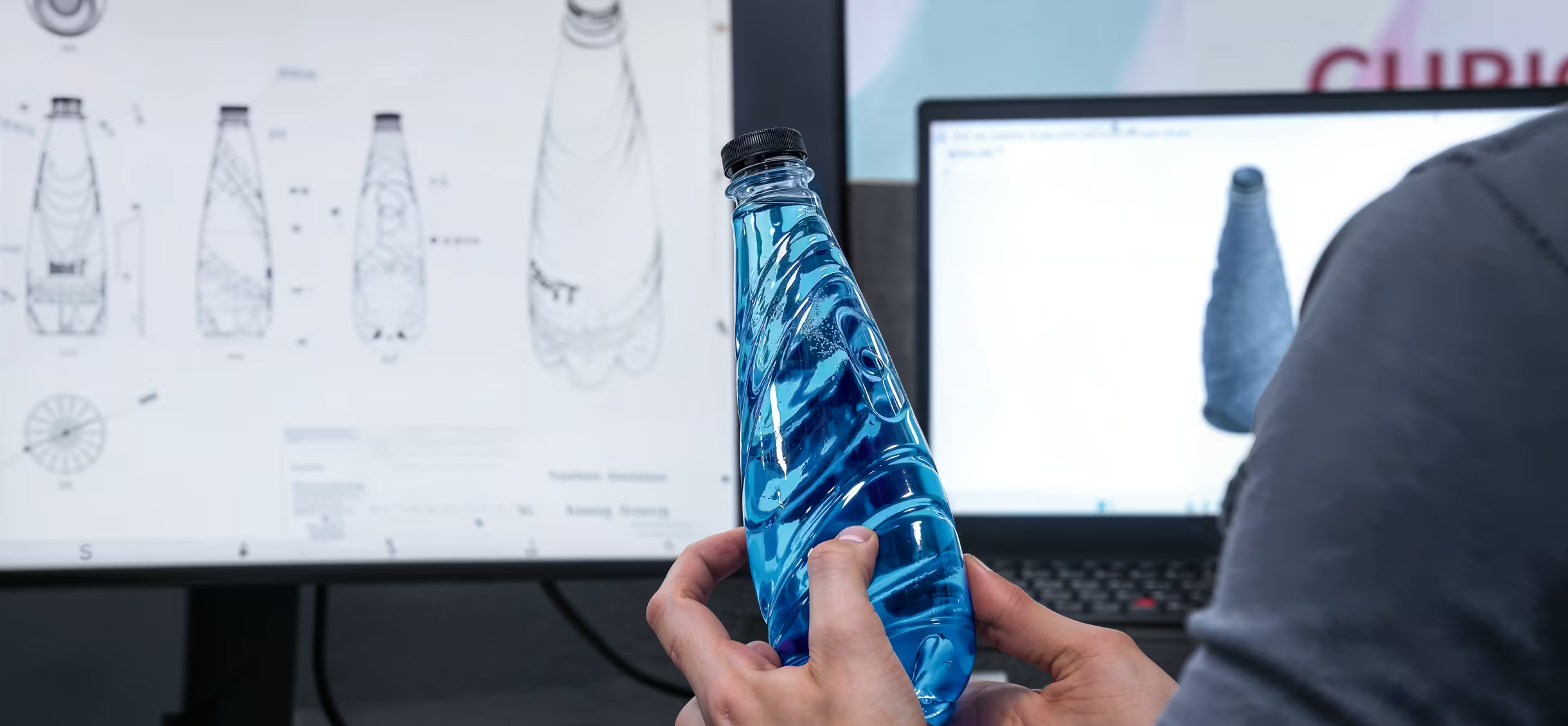
A precise 3D drawing of the desired container provides an excellent starting point for design optimisations. The volume, weight and geometries of the shoulder and base are the basis for the reverse engineering calculations. Since the bottleneck dimensions remain unchanged during the stretch blow moulding process, it serves as the starting point for the preform’s mouth geometry. Taking the biaxial stretch ratio into account – typically a factor of eight – the preform’s length, diameter and wall thickness can then be calculated.
Simulation instead of trial and error.
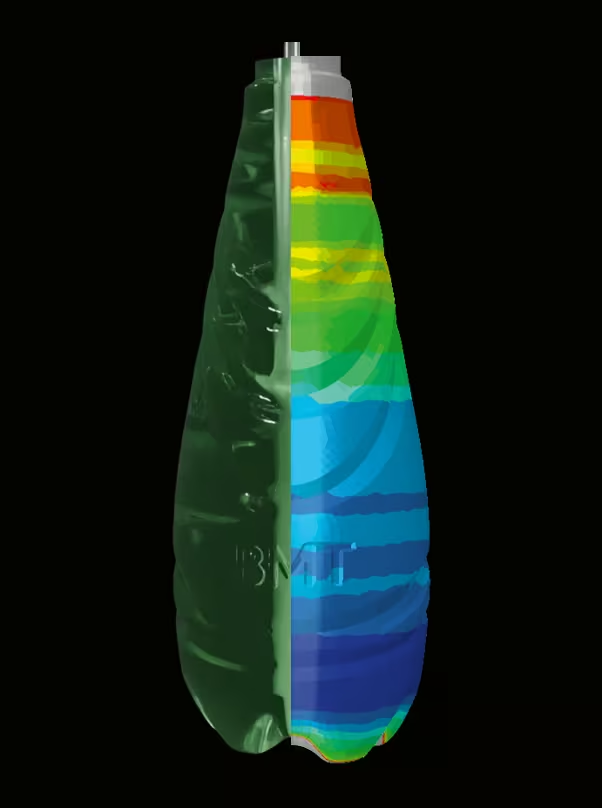
The biggest challenge in reverse engineering is understanding the entire stretch blow moulding process. The stretch ratio, processing temperatures, blowing pressures and cooling all significantly influence the result. Blow Moulding Technologies (BMT) employs digital simulation instead of producing a costly, time-consuming test series. Using its proprietary BLOWSCAN and THERMOSCAN technologies, BMT captures real material behavioural data under production conditions. BMT’s THERMOSCAN system measures the internal and external temperature distribution within the preform with a precision of 0.5 °C.
The captured data is then incorporated into an AI-supported simulation that models the expected material behaviour with an accuracy of up to 95 percent. This allows the wall thickness distribution, compression strength and burst pressure of the bottle to be virtually validated even before the tooling is designed. Changes to the design or the process can initially be tested digitally, minimising the use of costly prototypes.
rPET’s unique challenges.
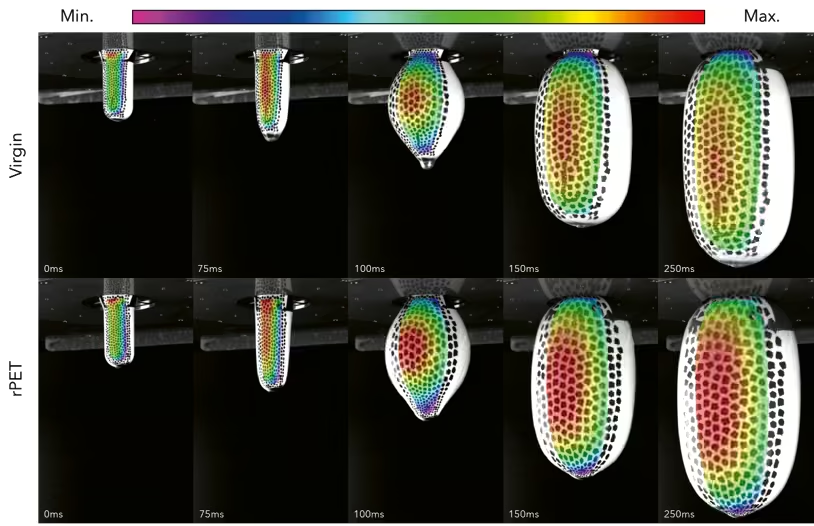
Using mechanically recycled rPET poses real technical challenges for manufacturers that can only be partially overcome with conventional methods. Due to thermal degradation, rPET has a significantly narrower processing window than virgin material. Without precise control, there is a risk of pearlescence, a milky haze also known as stress whitening, which degrades bottle quality. BMT’s combined method of digital simulation and material characteristics allows the properties of rPET batches to be precisely modelled. This, in turn, enables the precise adjustment of stretch rates and temperatures.
Every gram saved counts.
Materials account for approximately 70 percent of the cost of preforms. In case studies, BMT achieved a 13 percent weight reduction with a 20.7-gram preform without compromising the packaging’s characteristics. Apply this weight reduction to an output of 25 million bottles per year and it amounts to a saving of over 65 tons of plastic, which significantly affects the CO2 balance while reducing material costs. By adapting specific insert components, this kind of savings can also be realised with existing moulds.
Fewer process interfaces.
When the mouldmaker performs this reverse engineering themselves, the design and tooling are perfectly aligned from the outset. Otto Hofstetter AG, in collaboration with BMT, coordinates all the steps, from bottle analysis and simulation to preform concept development, tooling, bottle or preform sampling, right through to series production release. This full-service approach relieves the PET producer of the burden of coordinating and aligning the various partners. Furthermore, the process is independent of specific blow moulding machine manufacturers, allowing customers complete freedom in implementing individual designs. According to BMT’s experience, development times and overall costs for a preform are reduced by 30 to 50 percent. Through reduced scrap and lower material consumption, an investment in this form of reverse engineering often pays for itself within just a few months.
Supported every step of the way.
Reverse engineering integrates seamlessly into Otto Hofstetter AG’s comprehensive service portfolio. The Swiss mould specialists recommend incorporating their expertise as early as the conceptual phase. This could involve optimising the design of existing solutions for greater quality and more efficient material usage, with rigorous blow mould testing to ensure complete machine compatibility. Otto Hofstetter AG also builds pilot moulds with two to sixteen cavities in order to test preforms under realistic conditions using the customer’s original granulate. Small quantities of bottles can also be blown for testing purposes upon request.
Once all inspections and tests are successfully completed, the optimised production mould is manufactured, tested and delivered, along with complete documentation. Regular maintenance checks, performance optimisations and upgrade options are available throughout the mould’s entire service life.
Further production support comes from the OH-Xchange programme, which dramatically cuts downtime for the replacement of hot runners to two days instead of twenty. And Otto Hofstetter AG’s Second-Life platform supports secure buying and selling of refurbished, warrantied high-precision moulds.
All in all, in an increasingly challenging market environment, Otto Hofstetter AG constantly strives to help PET producers succeed, taking advantage of proven innovations to improve efficiency, cut costs and enhance quality.