Enzo, in the summer of 2016, you began your apprenticeship as a polymechanic at Otto Hofstetter AG. What motivated you to choose this career path?
I’ve always enjoyed working with my hands. When I was in secondary school, my father and I restored a motorcycle. Since then, I’ve been captivated by technology. I completed three different trial apprenticeships to find out which discipline suited me best. The decisive factor for me was that precision had to be central to the work, which is why I chose polymechanics. I saw that this profession fulfilled all my interests.
To what extent did your perception of the profession match reality?
During the short trial apprenticeship, you get a good impression of the work, although you hardly have access to the world of CNC machining in that time. That only came into play in the third and fourth years of the full apprenticeship, and it pleasantly surprised me. It’s incredibly exciting to combine technology and mechanics with computer science. In the first two years, you still work largely conventionally, learning the basic metalworking skills like turning, milling and grinding. These manual skills are still important today and I believe they should always be part of a polymechanic’s training. As the apprenticeship progresses, programming becomes ever more important. The individual parts become more complex, and the machines themselves more enclosed. Today, anyone who wants to become a polymechanic should also be enthusiastic about programming. This isn’t a drawback of the profession, in my view, but rather an enhancement.
Today you are the Deputy Head of the Soft Machining Department. What have you experienced on your way to that point?
It happened surprisingly quickly. After my apprenticeship, I gained a year of practical experience working in production. Like many young men in Switzerland, I then had to do my military service. After basic training, I completed an advanced programme to become a sergeant. This is where I gained my first leadership experience. It was an intense time. Not always easy, but formative. When I returned to Otto Hofstetter AG after almost two years, I immersed myself in robotics and automation. My keen interest must have caught the attention of my superiors, and I was gradually given more responsibility. Eventually, I was asked if I would like to take on the role of deputy department head. I was happy to accept, of course.
What did you take from the military into your professional life?
I learned to appreciate active and open communication. In the army, I always made sure to keep my team up-to-date and provided them with ample background information. Because if you understand the context of a task, you are more likely to complete it well. I now practice this active communication within my team as well. I don’t just tell them what needs to be done, but also explain why.
Everyone knew you as an apprentice. How did your colleagues react to your new role as a supervisor?
We’re a young team in the department and we respect each other. Therefore, my new role wasn’t a problem for anyone. It’s a give-and-take environment, where we help each other. I think a young team has an advantage in such situations: there are fewer entrenched structures that first need to be overcome.
What fascinates you most about working with computer-controlled machines?
The possibilities with these tools are virtually endless. You can approach a task in many ways and still reach the desired goal. What you make of it depends on your own knowledge and expertise. No computer can do that, and that’s what makes the work interesting every single day. Our metalworking machines do have some AI elements built in, such as a thermal imaging system that automatically corrects temperature-dependent parameters in the summer. But how you fundamentally approach the machining of a component and which strategy you choose is still decided by a human.
What tasks are most important in the daily organisation of your department?
We have a weekly quota that we have to meet. While the machine’s features allow it to plan some tasks itself, the selection of specific tools is my responsibility. Pre-programming is also very important. Once one job is finished, the next one must be ready to start without any downtime. My colleagues are each responsible for their own area. This makes the work independent and interesting for everyone. My job is to coordinate everything and to ensure that everything works together seamlessly.
What constitutes good teamwork for you?
First and foremost, communication is key. We’ve just commissioned a new workstation and we’re processing many orders for the first time. This requires defining which raw material, dimensions and processes are suitable. My colleagues come to me with their questions, which I greatly appreciate. Trust is very important to me. In our daily work, it often happens that someone programs an order and another person executes it. You have to be able to rely on your colleague having done their job carefully. In our team, everyone can operate all six CNC machines, and everyone is enthusiastic about their work. That’s not something to take for granted.
How does this sense of camaraderie develop, and how do you maintain it?
Many of us have known each other since our apprenticeships, which provides a solid foundation. We go out for lunch together on Fridays, and we always sit together during breaks and chat. These kinds of habits don’t happen on command; they develop when you value and respect one another. Trust takes time. Once it’s in place, a lot of things practically run themselves.
Why is Otto Hofstetter AG an attractive employer for you?
Primarily because of the machinery we use. We have the latest equipment, we use robotics, and we work with a modern data management system and a large tool library. You don’t find that everywhere, and it makes the work even more appealing. When I hear about other companies, I realise that we’re really at the forefront when it comes to technology. The working environment is equally important. For example, vacation planning works well, and you can structure your days yourself. We also offer team events like a ski day in winter. That kind of shared activity is invaluable.
Precision dominates your professional life. Does that also show up in your private life?
Absolutely. For example, my apartment is always tidy. I’m also very organised when it comes to cooking – which I really enjoy. I’ve been living with my girlfriend for a while now. She’s a figure skating coach. Her job requires her to have a very structured day and to plan and coordinate her time to an extraordinary degree. At home, she enjoys it when I take on a bit more of the organisational and tidying-up tasks, which is fine with me.
You do Crossfit as a way to unwind. Why that in particular?
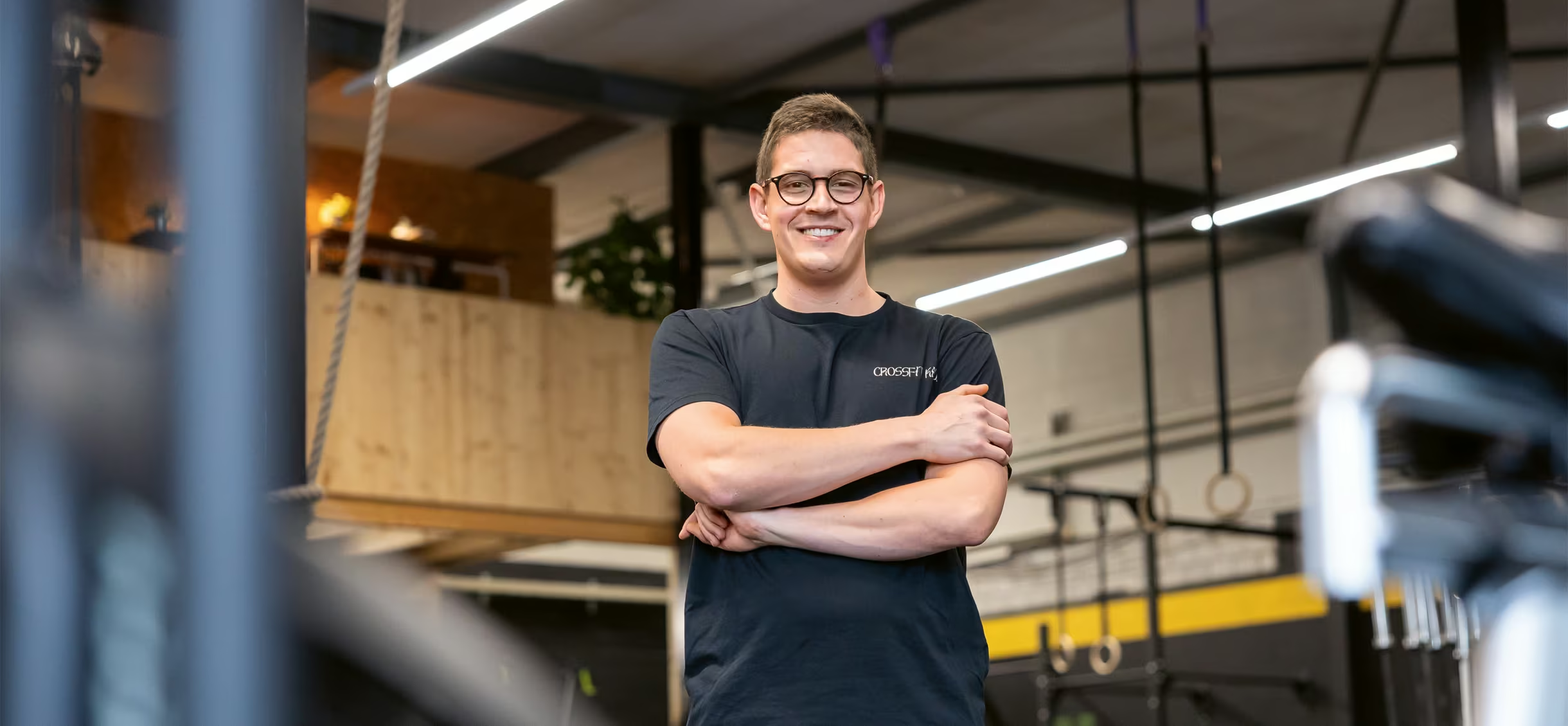
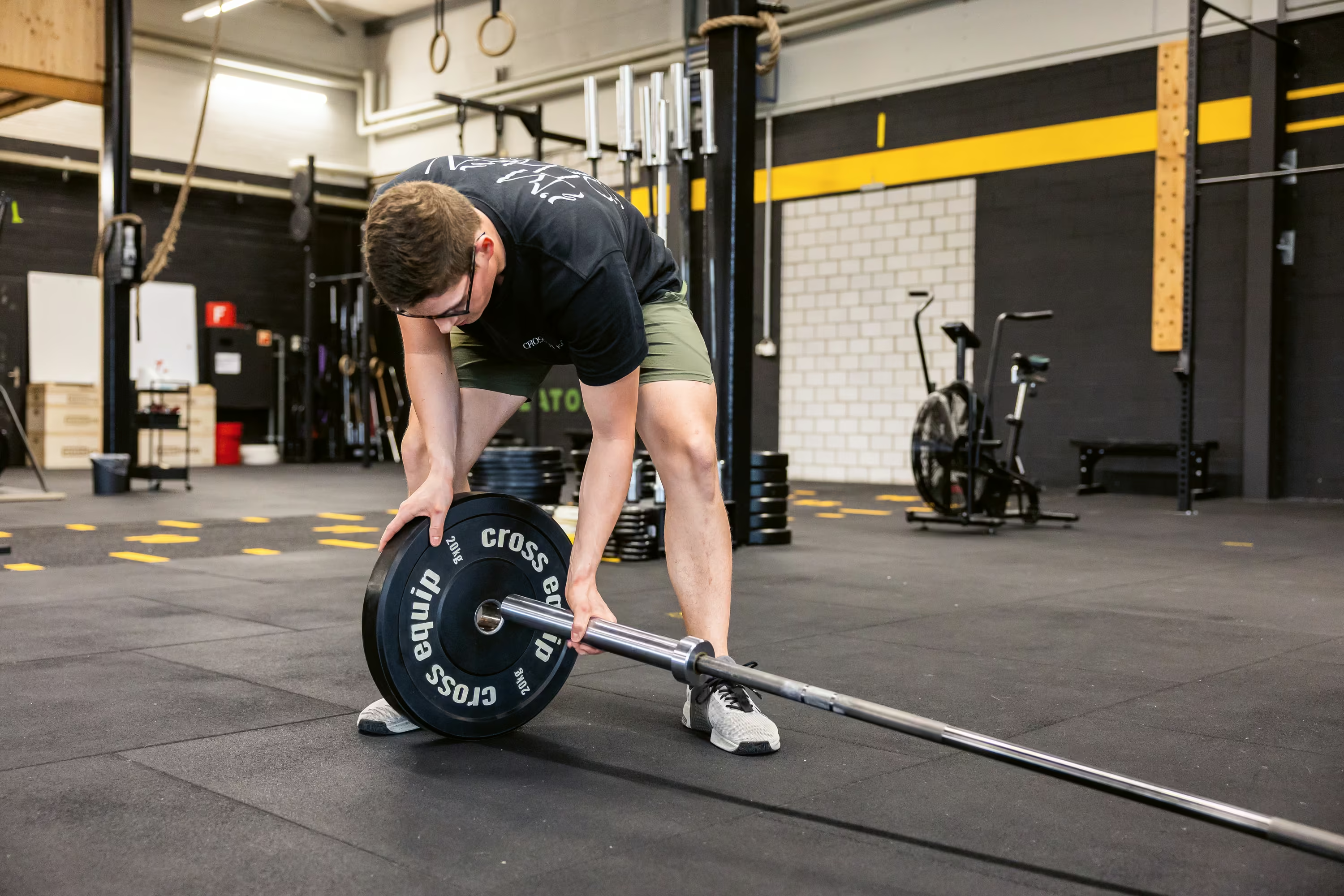
Completely switching off my brain for an hour, that’s the key for me. When you’re working on a machine that costs a million francs, you always have to be very focused. Crossfit allows me truly to switch off after work and simultaneously push my physical limits. The self-discipline required for that physical training also helps me in working life. The dynamic at the gym is also motivating. I used to train alone at the gym but when others are pushing themselves alongside me, I get more out of myself than I thought possible. We push each other. Since my girlfriend also does Crossfit, we participate in competitions together. We both have a lot of fun with that.
How important is sport for your overall well-being?
It’s very important to me. Sport gives me energy for everything else. When I get home after a workout, I’m exhausted, but satisfied. Plus, it helps me sleep better and think more clearly. And it teaches you to persevere. In sports, not everything works perfectly on the first go. And it’s the same in professional life.
You ski in the winter. What does skiing bring you?
I really enjoy the combination of speed, precision and the feeling of freedom in nature that I get from skiing. And enjoying a leisurely meal between runs makes a day on the slopes fulfilling. My family used to go on skiing holidays a lot and now I have continued this tradition with my girlfriend. Skiing is a hobby I want to pursue for as many years as possible.
You live in Rapperswil. What do you particularly appreciate about the town and the surrounding area?
I really like the landscape, the picturesque old town and the lake. In the summer, I cycle to go swimming. I can quickly do my shopping, and find almost everything else I need. Uznach is just fifteen minutes away and Zurich isn’t far either, if I need more than Rapperswil offers. I grew up in a village nearby and often drove to Rapperswil with my parents. All in all, I feel very comfortable in the town and its surroundings.
What are your career plans?
This year I’m starting further training to become a production manager, culminating in a Swiss federal professional certification. It lasts a year, with classes two evenings a week and all day on Saturday. Most of the classes are held online. This requires a lot of self-discipline, but I have plenty of that. After that, I’d like to find a position as a department head. My wish is to continue my professional development at Otto Hofstetter AG, as the company not only enables such development but also actively promotes it.
What advice would you give to young people considering an apprenticeship at Otto Hofstetter AG?
Anyone interested in technology and who enjoys working with their hands will find exactly what they’re looking for here. Here, you learn the profession of polymechanic from the ground up, not just a part of it. Furthermore, you work on real customer orders right from the start. This is a significant difference compared to companies where apprentices spend four years doing practice work and then have some catching up to do. With us, you understand why precision is important. You learn to appreciate quality standards, not because you have to, but because it makes sense.
Enzo Helbling, thank you very much for the interview.
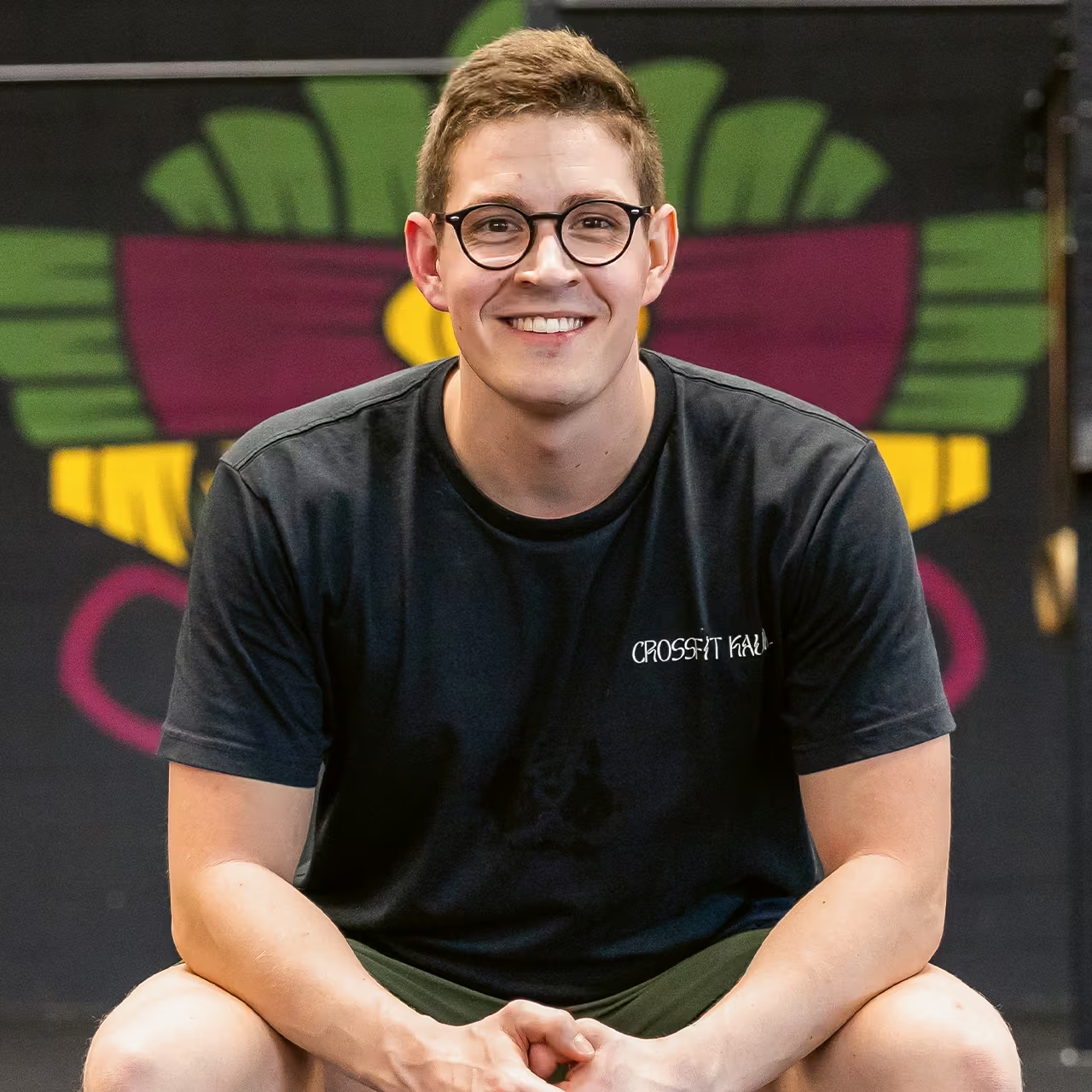
Enzo Helbling
He’s 25 years old and is Deputy Head of the Soft Machining Department at Otto Hofstetter AG, where he began his four-year apprenticeship as a polymechanic in 2016. He will start further training this year to become a production manager, a course of study that leads to a Swiss federal professional certification. He lives in Rapperswil, participates regularly in Crossfit training and is a passionate skier and cook.