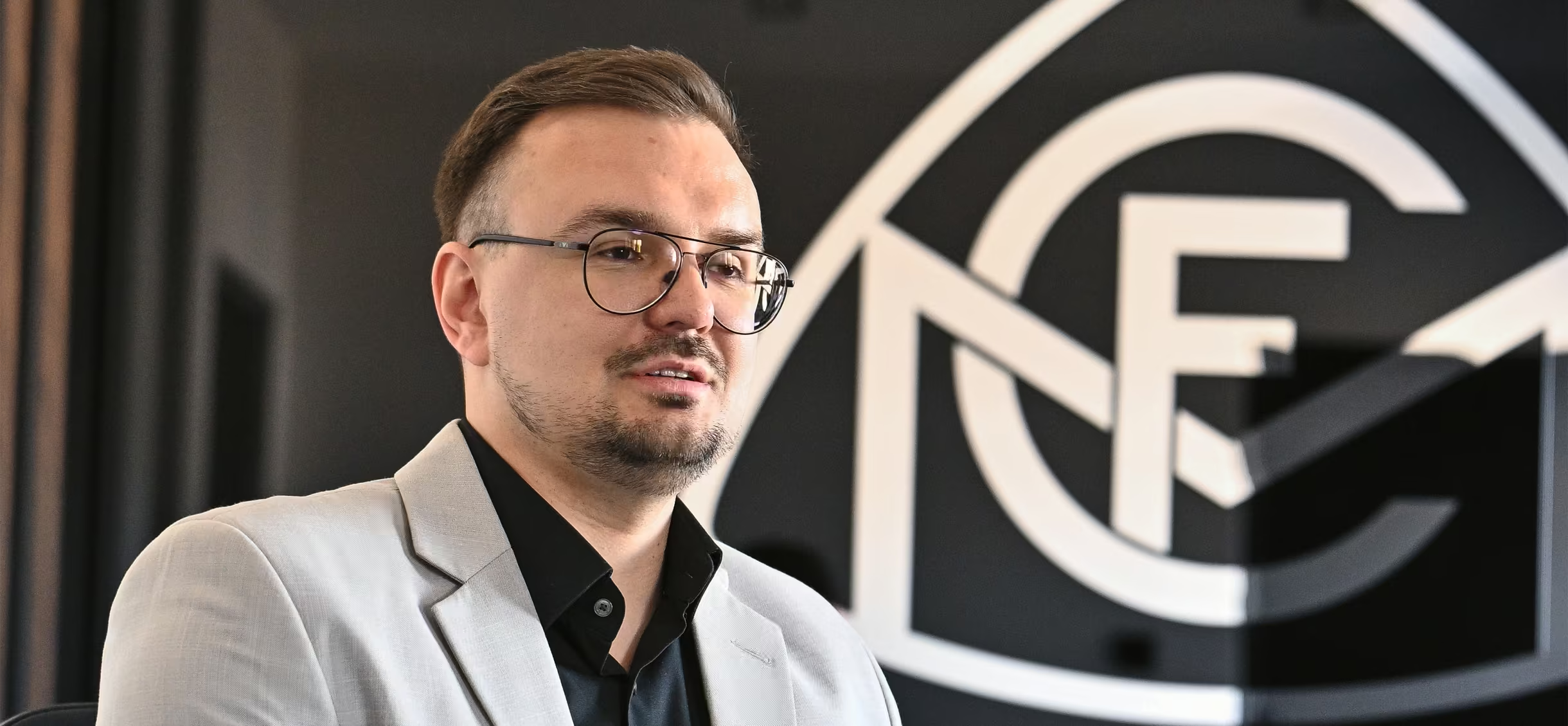
Let’s start by taking a look back at the early years of your company. What were the first products in your portfolio?
The name Młynex reveals a lot about our roots. “Młyn” is the Polish word for mill, and that’s exactly what my father, Florian, started with. He produced flour, powered by a stream-driven waterwheel. The business was challenging, and after a few years he decided to switch to plastics processing. He initially entered the bottle production business, purchasing preforms and blowing bottles himself. He soon realised that he could also manufacture the preforms. So, he bought a used BMB machine, built in 1992. That was the real starting point for what Młynex is today. He never changed the name because the mill’s history is part of our story.
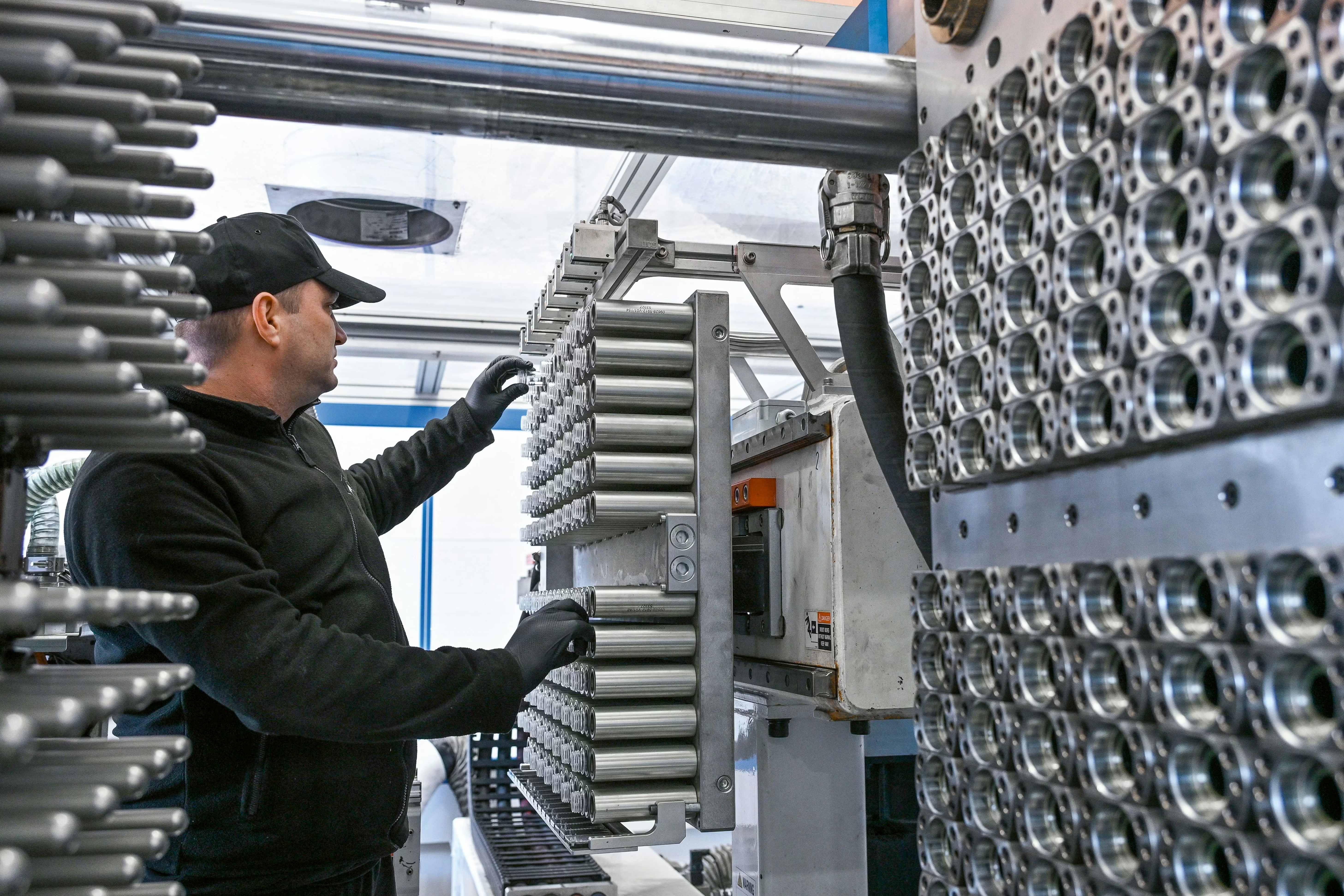
It began in 2000 with the purchase of a used system. Since then, Młynex’s output has grown steadily to its current level of 50 million preforms per month.
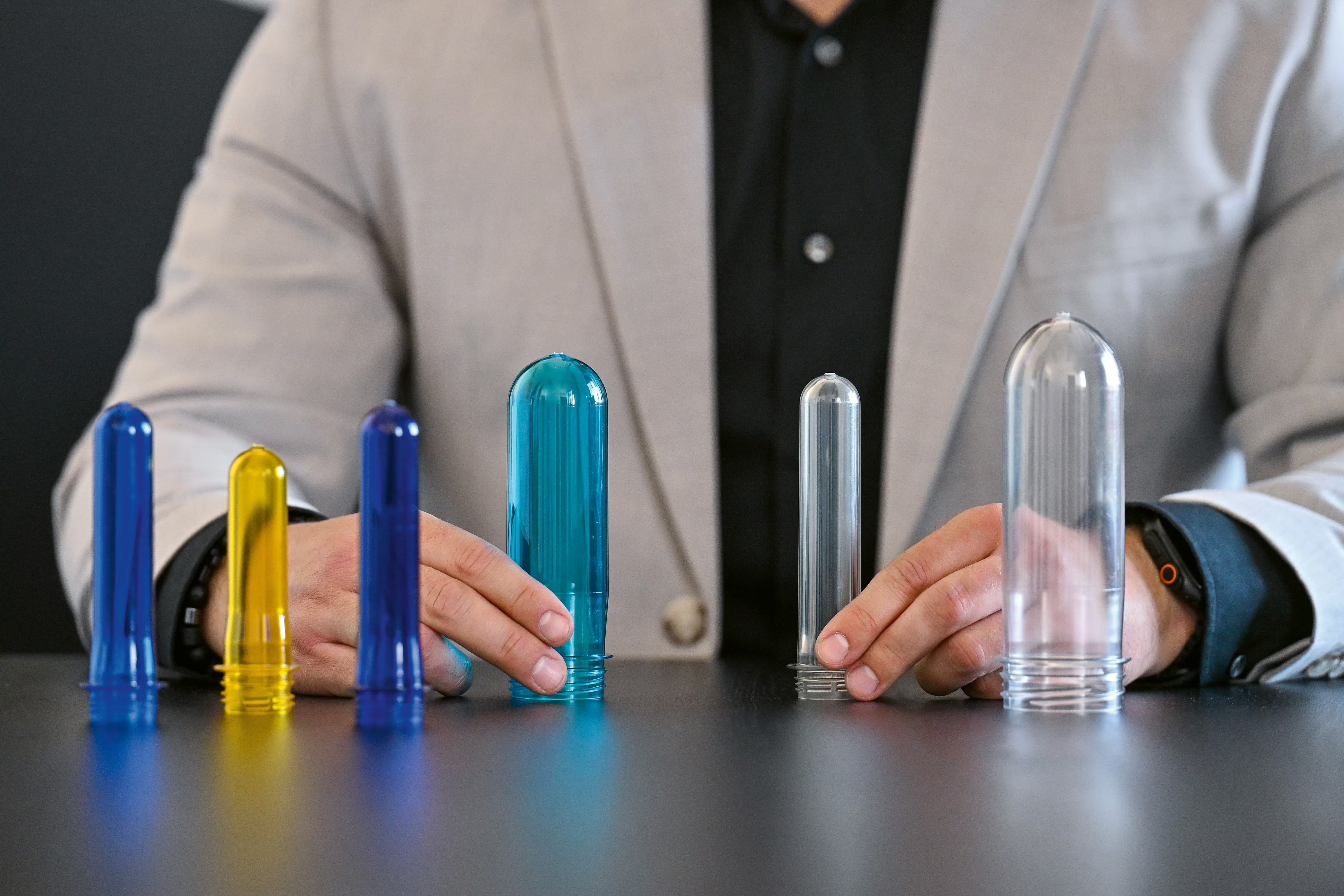
At Młynex, flexibility is the top priority, not volume, which is why the current product range comprises a total of fifteen different preforms.
Can you highlight the most significant milestones in the company’s history?
The purchase of that first injection moulding machine certainly counts. Back then, we knew very little about the technology. The first three or four years were very difficult. Sometimes we would produce for a week, then the machines would sit idle because we lacked new orders. Step by step, we learned the technical side of things and, at the same time, acquired new customers. Another leap forward came when my father was able to purchase four used machines from a Polish company that was going out of business. This significantly increased our capacity. In 2021, we then commissioned our first system from Otto Systems: a 96-cavity line with the BMB eKW320 and a Yudo robot. That was another big step for us.
How would you describe the company’s structure today, with its various business units?
We are a small, family-run company. My father has overall responsibility and makes the key decisions. I manage the operational side of the business, including customer relations, new projects, material procurement, sales, and logistics. There are six of us in the office, and the production team consists of 17 employees, including system operators, mechanics, and warehouse staff, as well as a production manager and an employee who focuses exclusively on quality control. Our company structure also adheres to the requirements of the BRCGS Packaging Materials Standard, which we have implemented. This provides security both for us and our customers.
With a monthly output of around 50 million preforms, you are a significant producer. How does your position help you within the overall Polish market?
We don’t see ourselves as a high-volume supplier competing with the largest companies on unit prices. Our strength lies in our flexibility. In Poland, there are many small and medium-sized bottlers who need custom bottles and the corresponding preforms in smaller quantities. We are the right partner for these customers. We also produce special colours and short runs. WIP, for example, is a much larger Polish company that we look to for guidance. But we are growing steadily and want to compete with the best.
What are the current PET industry trends in Poland?
The PET industry is under considerable pressure regarding sustainability and environmental responsibility. Large customers like Lidl and Aldi already require around 30 percent recycled material in the preforms. We are prepared for this. At the same time, we see a clear trend toward lighter preforms while maintaining the same strength. We are achieving this target together with our customers, especially with new neck geometries. And customisation is also a growing trend. More and more bottlers are looking for their own distinctive bottle shapes, which plays to our strengths as a flexible production partner.
You produce a range of 0.3- to 10-litre preforms. How has the demand for different neck standards, such as 28 mm, 38 mm or the new 26 mm neck, developed in recent years?
We currently offer five neck standards: PCO 28 1881, PCO 28 1810, Bericap 38-33, Bericap 48-40, and the new 26 mm neck, GME.30.37. We deliberately chose to keep the 1810 neck in our product range because many smaller customers still require it. We introduced the 26 mm neck in 2021 with our new production line. In total, we cover more than 15 products.
How are you dealing with the general shortage of skilled workers in Poland, and how do you find qualified staff for your production?
This is a real challenge, as it is everywhere in the world. The younger generation is more drawn to IT and social media. We can still find enough people for production positions in our region; Polish youngsters aren’t afraid of this work. For specialised engineers, we go directly to the Łódź University of Technology, which is nearby. We invite students to work with us and see if a long-term collaboration develops. We have found that once someone starts with us, they usually stay. Our employee turnover is low.
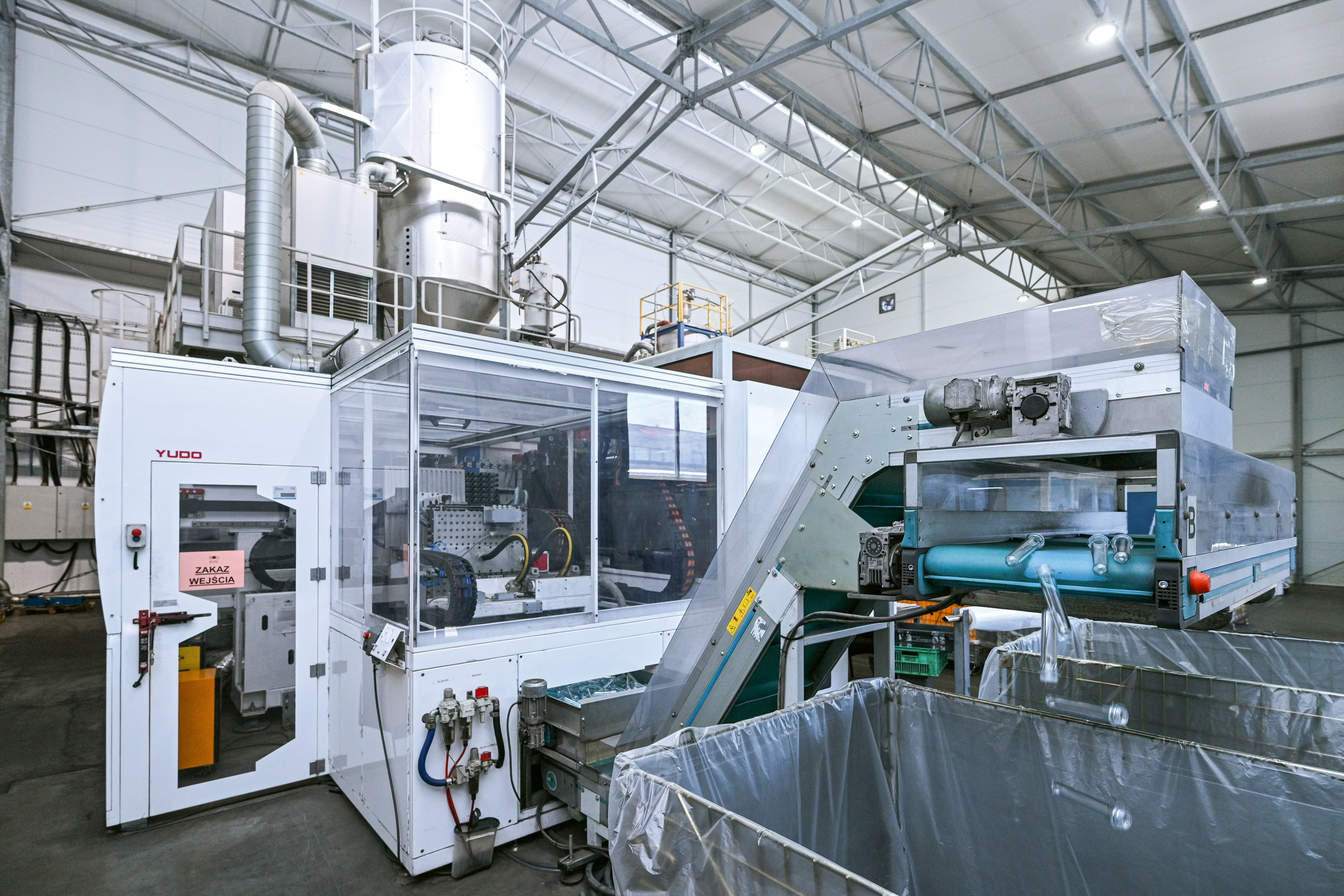
Process reliability and consistent high quality are top priorities for Młynex, which is why they rely on experts from BMB and Otto Hofstetter AG.
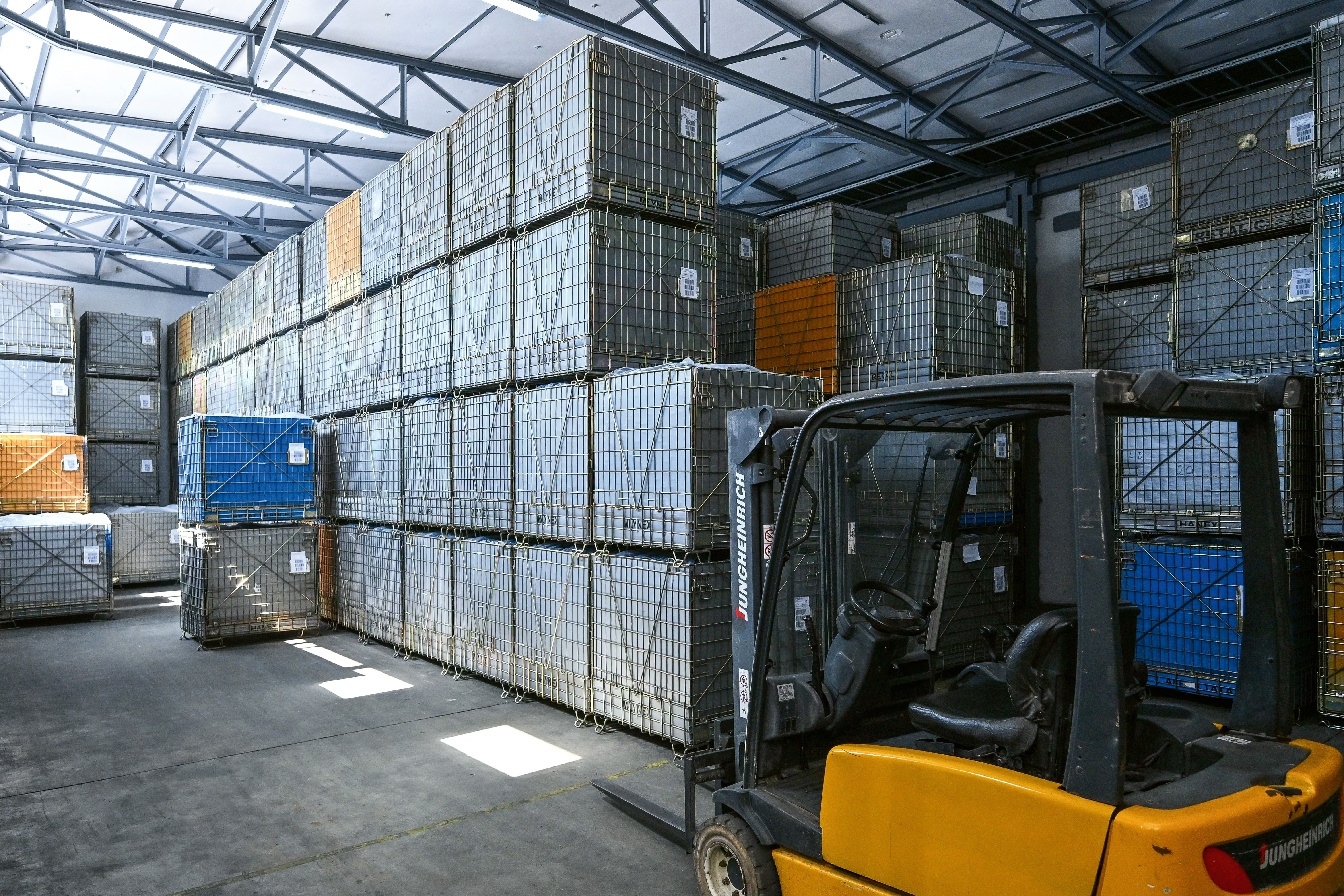
In Poland, there are many small and medium-sized bottlers who demand bottles in a wide variety of shapes and colours.
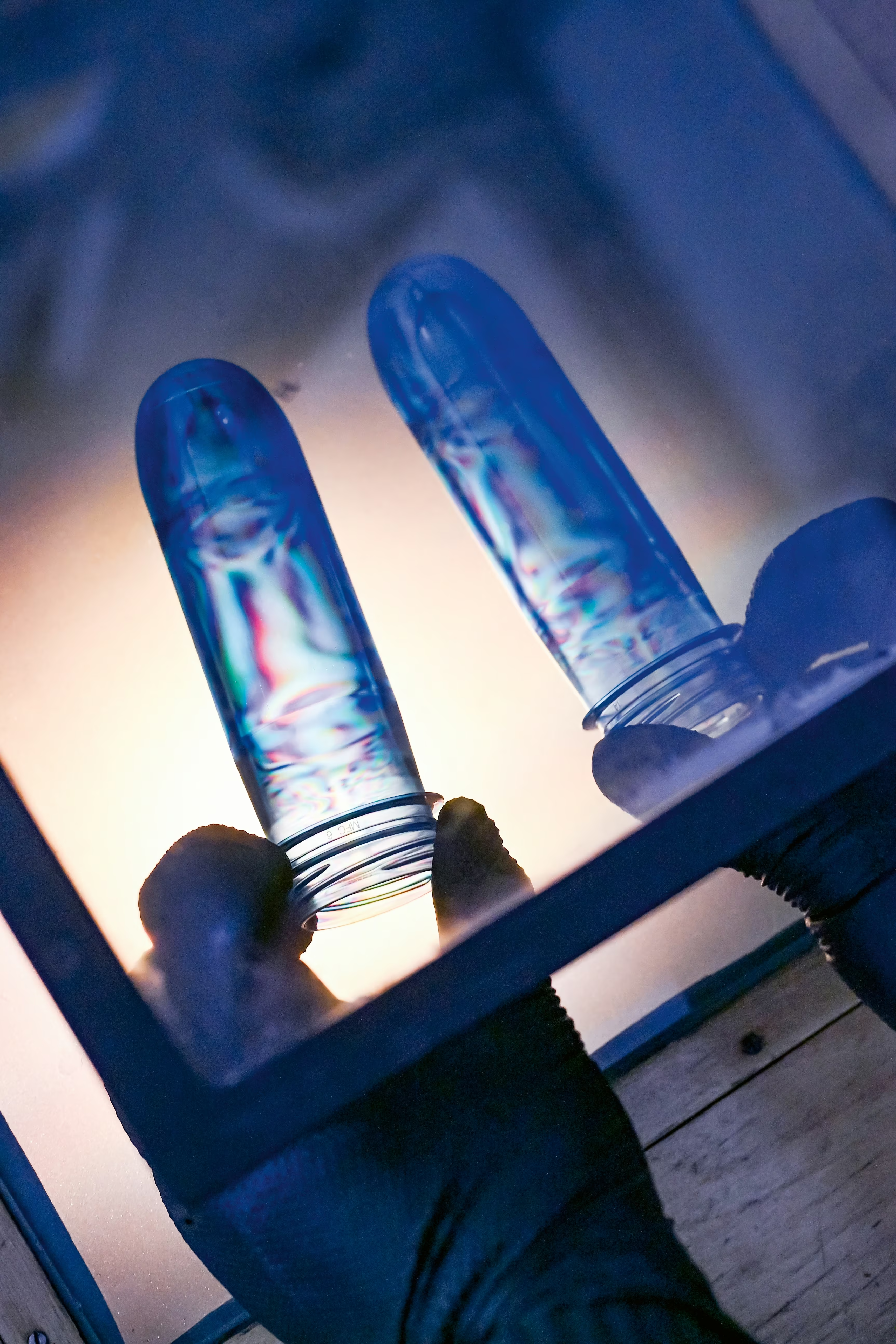
Młynex feels a strong responsibility towards its customers, which is why quality control is very rigorous.
How important is in-house training of junior staff to ensure your quality standards are maintained in the long term?
Very important. We focus on learning by doing. A new technician starts as an assistant and works alongside experienced colleagues. They grow into their role gradually. In the coming years, I would like to send our mould technicians to Uznach for targeted training directly at Otto Hofstetter AG. We want our people to know the moulds inside and out so they understand what they can do and what they absolutely must not do. We believe this is an investment that will pay off in the long run.
What makes Młynex particularly attractive as an employer in your region of Zduńska Wola?
We create a family-like atmosphere where everyone feels like a valued part of the team. My father and I know all the employees personally and we regularly visit the production area to talk to them. Anyone with a problem can talk directly to us. People appreciate that. Job security and a good working environment are very important to many people these days.
To what extent is rPET already being used in your production, and how do you see its future development?
We’re not yet a major player in the circular economy, but we’re preparing to become one. Today, we can already offer our customers preforms with around 30 percent rPET. Larger customers are actively requesting it; smaller ones not yet. But the proportion will grow, and we want to be ready when that demand arises.
Are high energy costs a challenge for you, and how do you ensure economical production?
By far the biggest cost factor in a preform is the material, around 80 percent. Regarding energy costs, we’ve already undertaken some actions. We’ve installed solar panels on all the roofs of our plant. In addition, we purchase electricity on the Polish spot market, which allows us to secure more favourable terms. Poland’s energy prices are not comparable to those of Germany or France. With our own solar power generation, we can improve the situation even further.
You use hybrid production systems sourced from Italy and moulds from Switzerland. What factors determine the quality of such a complete system for you?
For us, the combination of a reliable machine and a precise mould is crucial. We work exclusively with machines from BMB and moulds from Otto Hofstetter AG. This combination gives us the process reliability we need to deliver consistently high quality. We are very satisfied with this system and we closely follow the new solutions our two partners are developing.
Why did you decide to collaborate with Otto Hofstetter AG back in 2014?
The recommendation came from WIP, our then-supplier of used machines and a long-standing customer of Otto Hofstetter AG. WIP told us they were the best that Europe had to offer in mould-making. We trusted their assessment and followed their lead. It was the right decision. Since then, we have worked exclusively with moulds from Uznach.
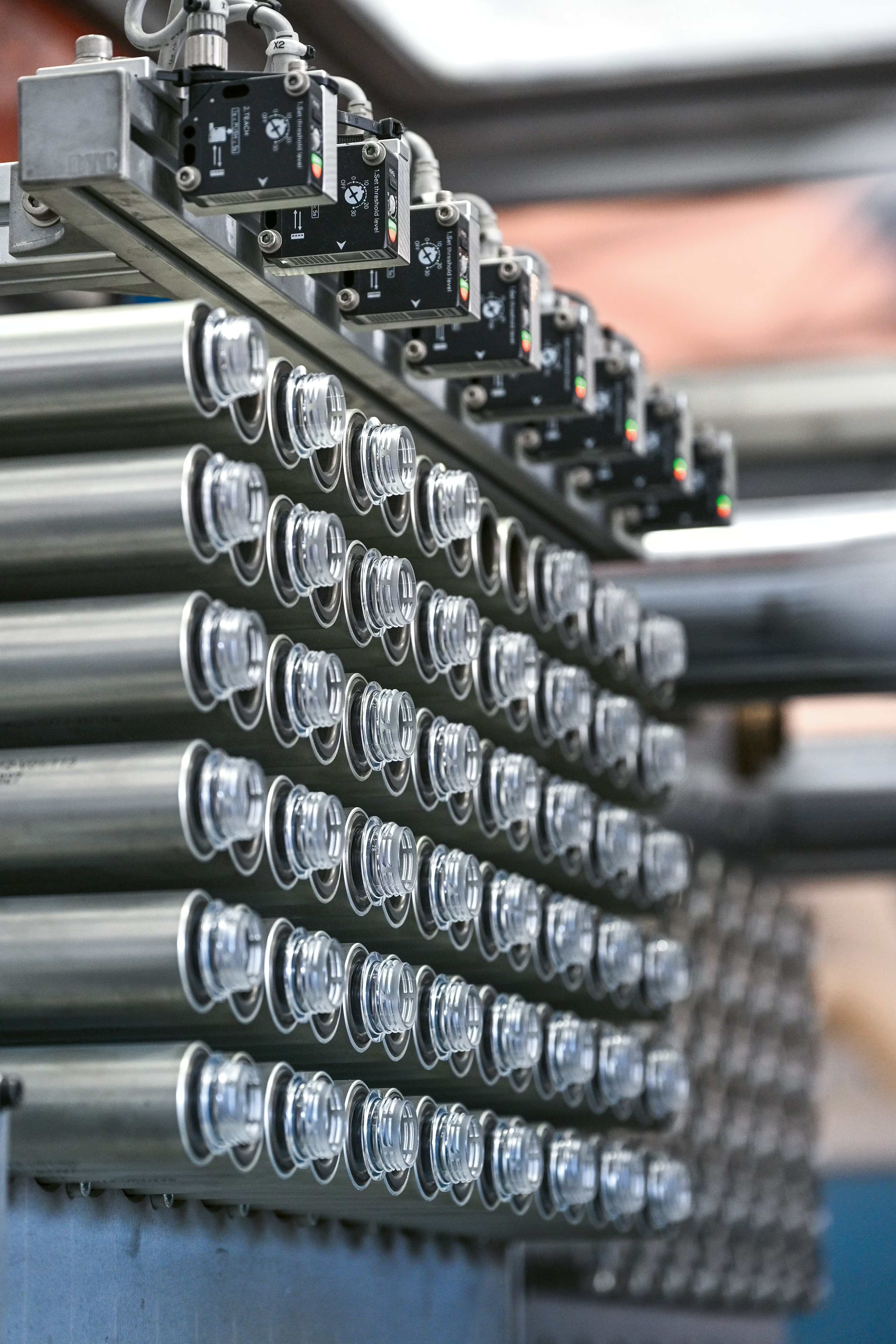
How important is it that your mould partner is also a family business?
You can feel it, and it’s important. We operate with similar values, even though Otto Hofstetter AG is on a completely different scale. And we know that Otto Hofstetter AG will still be around in 30 or 40 years because the next generation is already getting involved. I’ve already met Lea Hofstetter. It’s important to have a face, you know each other personally. That’s what we understand by a partnership.
At Otto Hofstetter AG, Albert Weber has been your contact for over ten years. What significance does this long-term personal relationship have for the development of your company?
For me, Albert is like a second father in business, along with my own father. If I have a problem, I send him a message, and he always replies. He finds solutions, even for unusual requirements, and remains open and uncomplicated. I’m very glad that we have this collaboration. Otto Hofstetter AG is an impressive company, and Albert is our anchor.
Where do you see Młynex in five to seven years, and what role will the planned modernisations of your existing plants play in that?
I have big dreams. A new building, new lines, more capacity, even more solar energy. But I think sequentially, in steps. This year and next are what count. We are going through difficult times right now, in the world and also in Poland. The next step is replacing our existing MC 350 plant with new, efficient production systems from Otto Systems. That’s happening, and that’s our focus right now. My daughter Viktoria is growing up; she’s smart and tech-savvy. Perhaps she’ll join us in a few years. The third generation is getting ready.