In a previous interview, in 2016, your father said he wanted to grow slowly. First in terms of products, then customers, then in terms of business areas. How far has SAF Bianco come along this path?
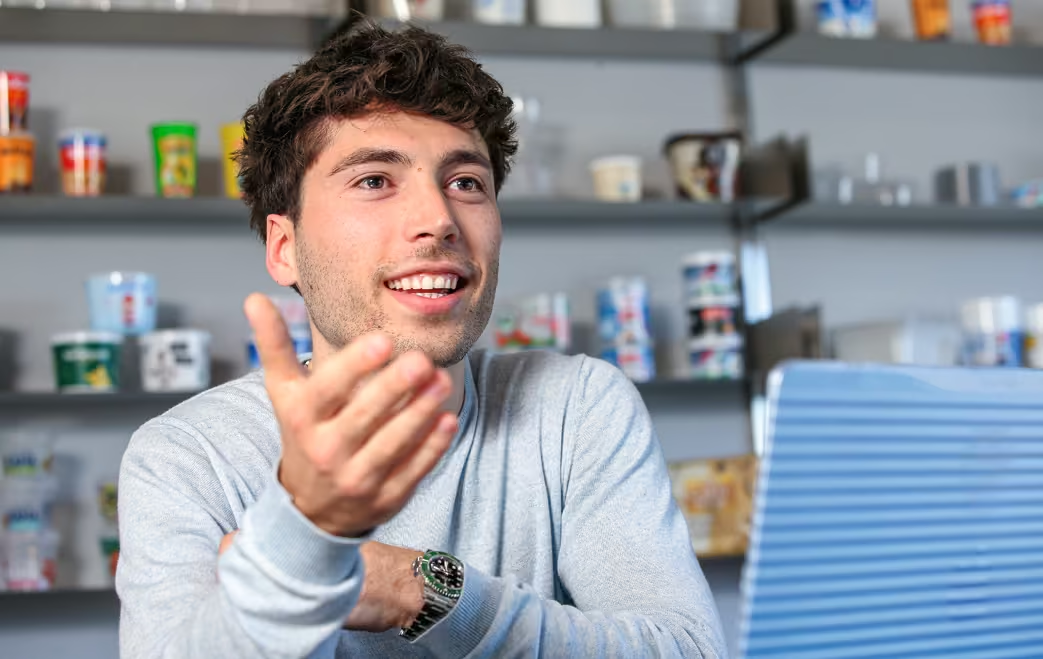
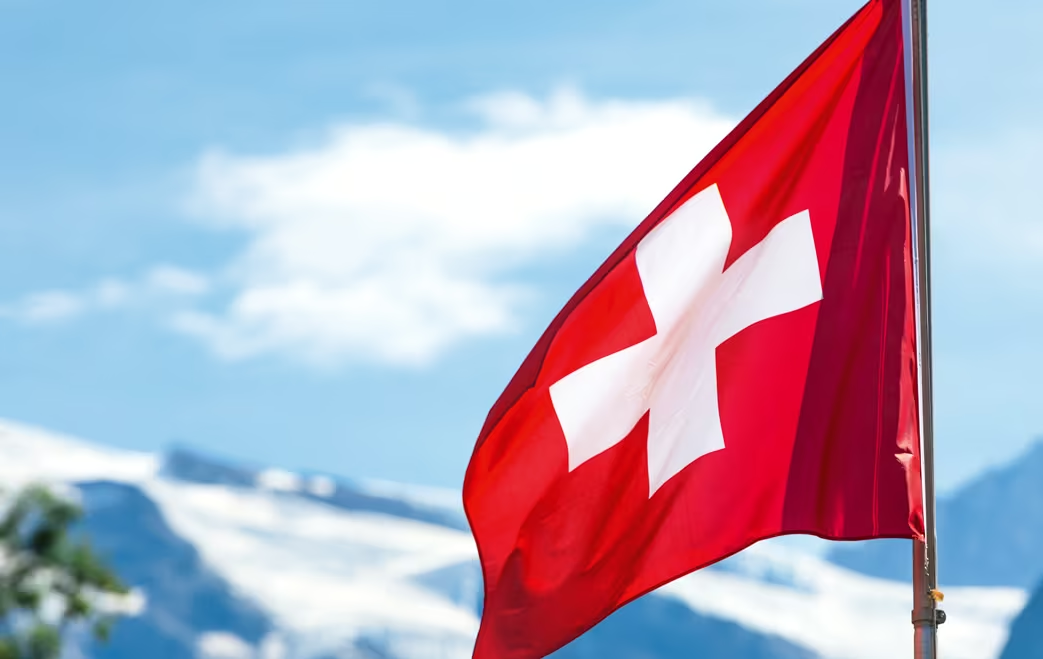
Emanuele Bianco: SAF Bianco is a completely different company today from what it was in 2016. Our production, warehousing, offices, even the exterior colour of the building, have all changed. And we haven’t just grown with the Italian market, but have also expanded internationally into Switzerland, Germany and the Czech Republic. We even export to the USA. But the most important things have not changed: our mindset, our values, and the way we treat customers and employees. These things are in the Bianco family’s DNA, and that doesn’t change.
In 2016, SAF Bianco employed 37 people and produced around 350 million packages a year. Where does the company stand today?
We’ve grown by about two percent annually and now produce approximately 425 million units a year. We employ 34 permanent people, plus about 20 more between on-call staff and external specialists in sales, design, and legal – a total of 50 to 55 people. If you include the new sister company for thermoforming, that adds another 15 people and 200 to 250 million units per year. We were also able to acquire the building next to our existing plant and set up a new, semi-automated warehouse. This move will enable us to double our production capacity compared to two years ago.
So, your father has added a second technology. What’s behind this decision?
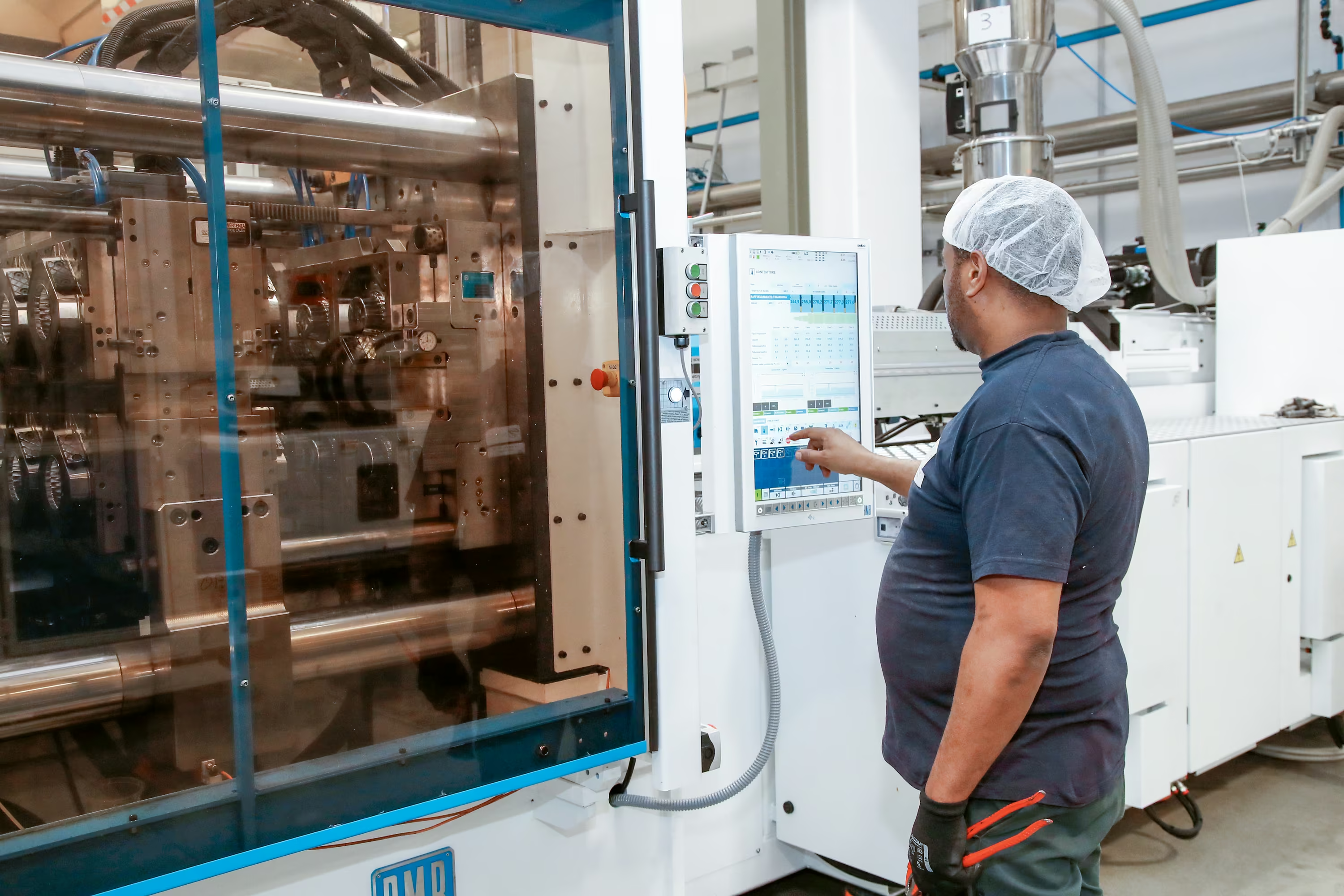
Our goal is to serve the food industry as a packaging group, regardless of the material or technology that is called for. Every technology has its advantages and disadvantages. Some are cheaper and more productive while others offer higher quality and flexibility in design. What’s best for the customer depends on their specific needs. With injection moulding and thermoforming, we can now meet more customer needs than ever before.
When did you join the company, and what is your role today?
I joined SAF almost a year ago. After completing my bachelor’s degree in engineering in Milan, I gained experience in strategic consulting in Singapore. Later, while finishing my master’s, I joined a special programme at Otto Hofstetter AG in Switzerland to deepen my understanding of the technical aspects of injection moulding.
Today, I work in SAF’s research and development department, not only because innovation is my passion, but also because it has been the focus of my most recent studies. I also spend time in the production department, learning more about moulds and machines, and I closely follow my father across a wide range of activities, from legal matters and strategic investments to procurement and customer meetings. It’s about understanding the company from the ground up, with the goal of being ready to lead it one day.
In 2016, your father said the third generation was still too young even to think about the fourth generation joining. What has changed since then?
Perhaps we’ve all grown up a bit. No, seriously: the passion for packaging and the connection to my family’s business have always been there. From an early age, I could see myself continuing the legacy of a family that has been in this industry for over 80 years. Today, I can see that my father and his cousins are happy to know that someone carrying their surname may one day take over the company, as that’s not something to take for granted nowadays. In the end, they’re not simply handing over a business, they’re entrusting responsibility towards the employees, towards the customers, and towards the region.
What does innovation mean to you?
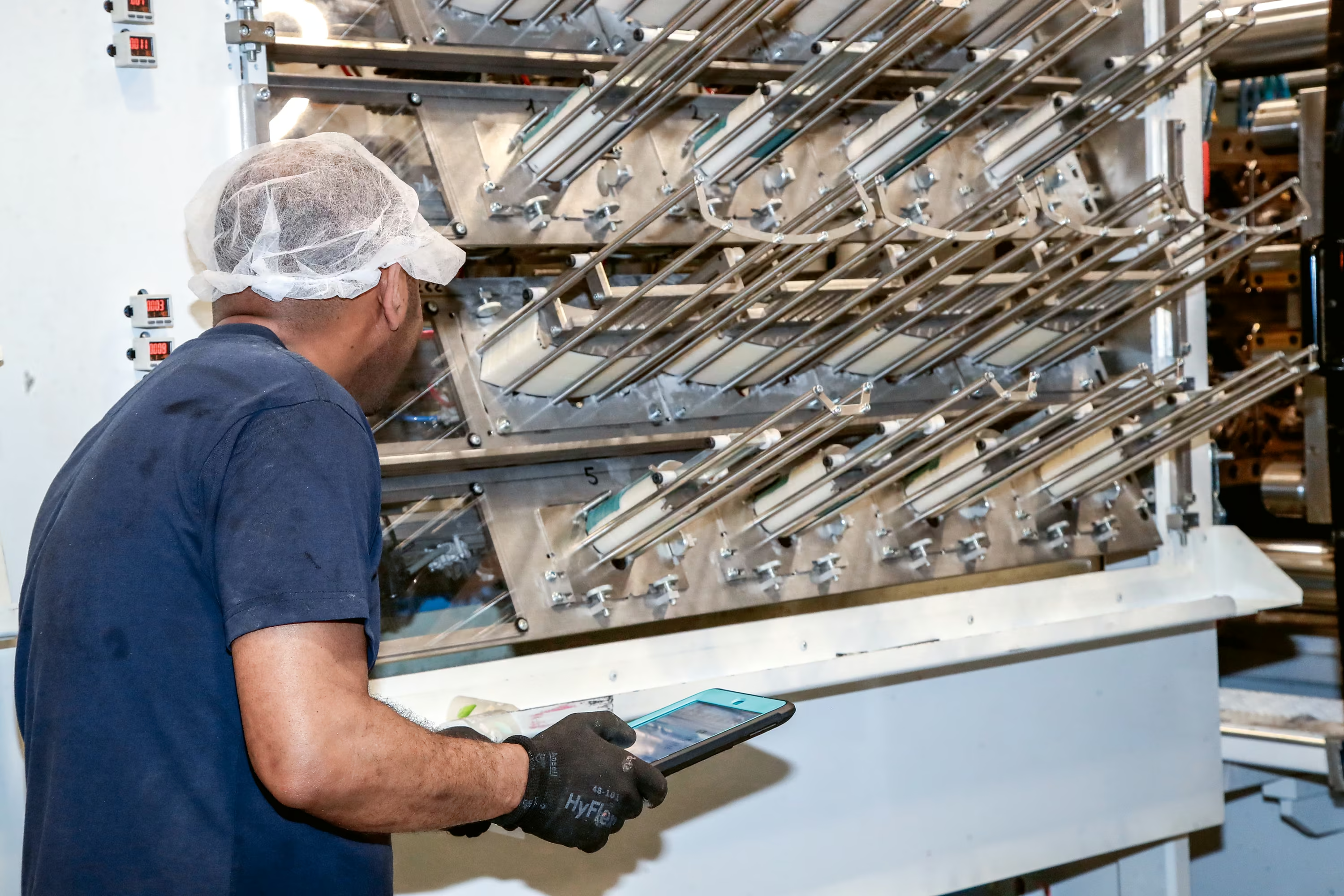
For me, innovation isn’t a narrowly defined term. It can take many forms: the launch of a new product, or a programme that improves working conditions for our employees, or even the establishment of a school partnership to educate younger generations on how plastics should be used responsibly. The crucial point is that innovation doesn’t necessarily have to be something entirely new to the world. You can also combine ideas and approaches from other industries to create something meaningful for SAF Bianco.
Previously, in product design, everything was created by hand and prototypes were built out of wood. Today, we work with software and 3D technologies. Customers will soon be able to see their product realistically on the shelf, using VR technologies, adjusting dimensions and decorations without having to wait weeks for a physical prototype. This has already transformed our product development process. Who knows what’s coming next? I’m excited to be part of it.
Let’s talk about sustainability. In 2016, your father spoke of his plans for biodegradable materials. Have these plans been implemented? At the same time, the latest EU Packaging Directive sets ambitious targets for 2030. What does that mean specifically for SAF Bianco?
I have to say that we’ve had to revise that earlier assessment. At the time, there was a great deal of uncertainty surrounding biodegradable materials. Today, we know that they are not the right answer for food packaging. What we need is not a linear economy with the lowest possible impact, but a functioning circular economy. As converters, our role is to develop products that are easier to recycle, use less material, and require less energy to produce.
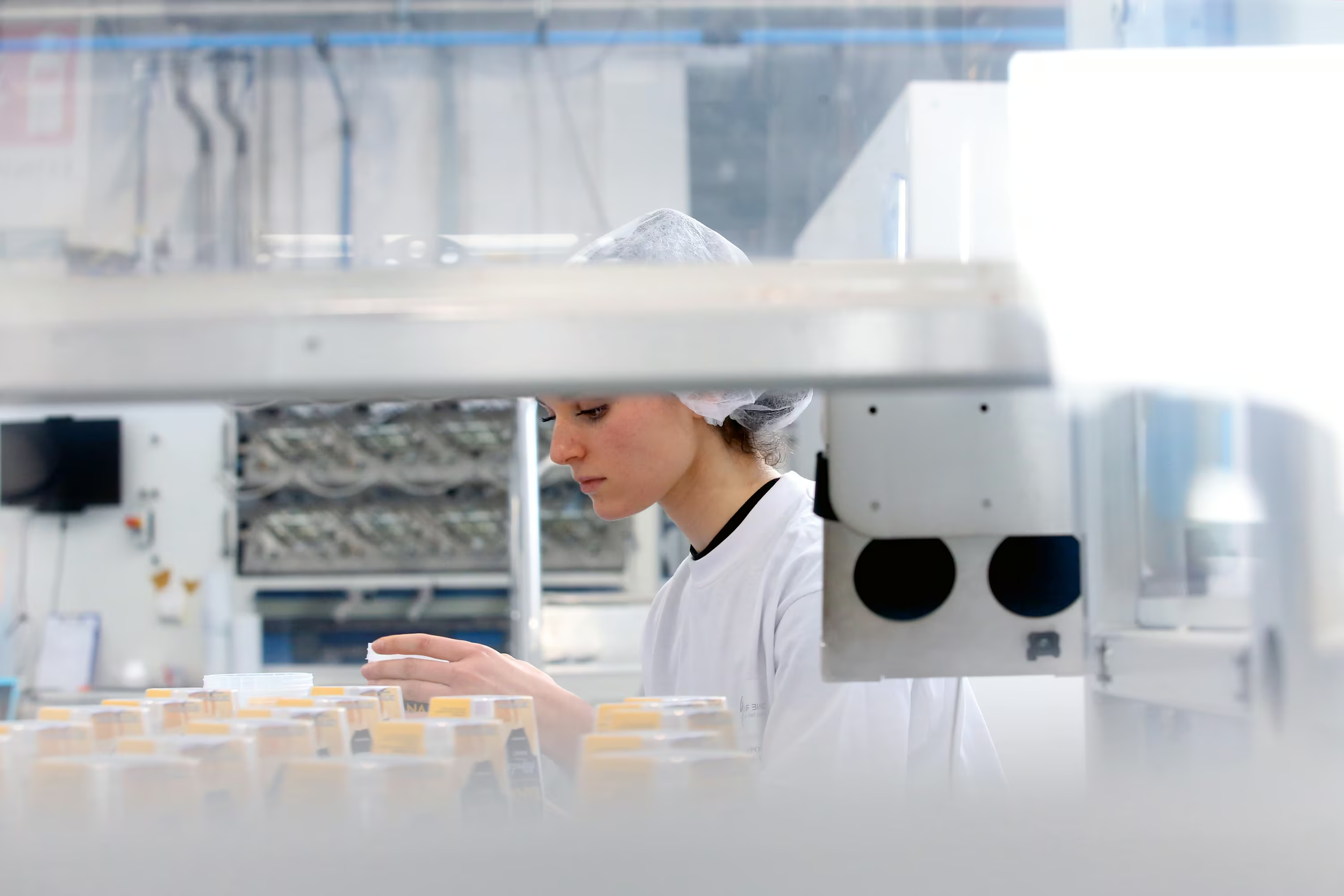
With respect to the new EU regulations, I consider myself particularly fortunate. My father started embracing the principles of PPWR over 20 years ago, driven by strong business intuition – an approach that today clearly sets us apart from the competition, with a product portfolio that is already largely compliant with the new requirements. This has only been possible thanks to the ecosystem of partners we have built over time – partners capable of providing the most advanced and efficient technologies available on the market. Otto Hofstetter AG is a key part of this equation, enabling us to operate at the highest level of efficiency with some of the most advanced moulds in the industry.
SAF Bianco is ISCC-PLUS certified, among other certifications, and has published a sustainability report since 2022. What changes has this process brought internally?
It has forced us to take a closer look at all aspects of the business. Today, we measure our corporate carbon footprint and produce ESG reports. We invest heavily in energy efficiency and we recently installed solar panels. What’s more, the Bollino Etico Sociale (Social Ethical Certificate) that we carry certifies that we also care about our employees and the region. We support sports clubs, schools and social projects, including two villages in Africa that we provide with access to clean water. In addition, we are implementing a new employee benefits programme that includes health insurance and subsidies for energy and food costs. Anyone who works a third of their day for our company deserves support that goes beyond their wages. The impact of our commitment to our employees is reflected in our low employee turnover: when someone leaves the company, it’s usually because they’re retiring.
How has the competitive landscape in your segment developed?
The Italian market is one of the most demanding in Europe. It was back in 2016, it is today, and it will continue to be in future. There are many players offering a wide range of products, backed by years of experience in the industry. In this context, SAF competes with a disruptive approach. We invest in the most advanced technologies available and consistently aim to excel in efficiency, reliability and product quality.
Competition is also intensifying today as there is growing pressure from alternative materials such as paper. Nowadays, packaging-related decisions can be driven by marketing considerations, and newer generations are not always fully aware of the role plastics can play within a well-functioning circular economy. Polymers have shaped modern society, and they remain the most effective materials in protecting food and reducing waste. For this reason, SAF has also evolved towards a more consultancy-oriented approach: we not only help our customers with designing tailored solutions that are both appealing and efficient, but we also guide them in making truly sustainable and compliant choices. This positioning clearly sets us apart from our competitors, allowing us to excel particularly in specialised market segments, where leading F&B players want to be served by forward-looking and reliable partners.
In 2016, your father said that a handshake, a phone call or an email was all it took to get things started with Otto Hofstetter AG. How has this partnership developed since then?
The most important component has always remained the same: trust. What has changed is the intensity of the collaboration. Today, we purchase more moulds, the projects are more complex, and the communication has become even closer. Fabio Crestani at Otto Hofstetter AG is an essential contact for us. He knows our production, our requirements and our history. This isn’t the typical customer-supplier relationship, it’s a long-lasting partnership where both parties have evolved together. However, the dependence on a single person also carries a risk if that person is unavailable. That’s something we consider.
For you personally, this partnership has been a given from the very beginning. How do you experience the collaboration? What would you like to see more of from Otto Hofstetter AG?
As a matter of course, I experience working with Otto Hofstetter AG in the most positive ways. What impresses me is the combination of technical expertise and personal commitment. That’s not the case everywhere in this industry. To be honest, what I’d like to see in future is more exchange about new processes. Injection compression moulding is a technology that some European competitors are already experimenting with. That’s an area where I’d like to see more input from Otto Hofstetter.
Looking ahead to the next ten years, how do you think SAF Bianco will be positioned then?
I hope SAF Bianco will be bigger, but I want that to happen without losing our identity or vision. I strongly believe in my father’s philosophy of preferring a small diamond to a big rock. I’ve always admired his passion for this business and his willingness to give it everything. Today, he is giving me the space to build a young team, experiment, and learn from mistakes. Together, our goal is to grow steadily and organically, evolving into a packaging group capable of serving a wide range of customers in the food industry. At the core, however, nothing changes: we want to keep supporting our customers in delivering food safely into people’s homes. It’s a noble mission that I deeply embrace, one I’m committed to carrying forward to make both my father and our family proud.