Mr Hariyadi, I heard that you founded your company in 1996 with only a hundred dollars in start-up capital. What prompted you to take this step?
I have to back up a bit. I studied in the United States. Since my father had clear expectations regarding his support, I worked while studying or had friends advance my tuition, and after two and a half years, I graduated. That was a valuable lesson in self-reliance.
After graduating, I returned to Indonesia. I had a hundred dollars in my pocket and a simple but clear vision in my mind: drinking water is a basic need, the population is growing rapidly and the public water supply system cannot meet demand. If I have production, quality, waste and efficiency under control, something great can happen. Marketing wasn't the starting point. I built the company from the production perspective, focusing on processes, productivity, material usage and reliable delivery. That was my path, and it still shapes us today.
What were the biggest hurdles you had to overcome?
The biggest test came with the crisis of 1998 and 1999. Exchange rates and material prices exploded, supply chains stalled and many companies could no longer meet their obligations. I procured raw materials in cash at the spot price and offered customers a prepayment discount. This kept the material flow stable and commitments were met. At the same time, I analysed every operational metric, from the waste rates to energy consumption to warehouse routes. If necessary, I stood at the machines through the night. This discipline carried us through that difficult time. Whoever creates stability first, survives. Growth only follows afterwards.
This was when I developed the habit of calculating every detail. How many steps does a change in the process require and how much time does it take? What does cutting a tenth of a second in the cycle bring us? Where do we lose material and where do we lose time? This way of thinking still shapes our actions today.
Your father was also in the water business. Why did you start your own company anyway?
My father had a different philosophy of business. He was a trader for most of his life. For me, the water business is an industrial challenge, with the need for continuous investment and the obligation to continuously develop processes and people. I also wanted to be able to make independent decisions, bear risks myself and create my own success. This also follows my attitude towards succession. Success cannot be inherited. I hold the same view with my children. Should they one day decide to continue my company, they will have to buy it from me. I will show them how it's done, but then I will step back. Only then can they do "their own thing" and celebrate their own successes.
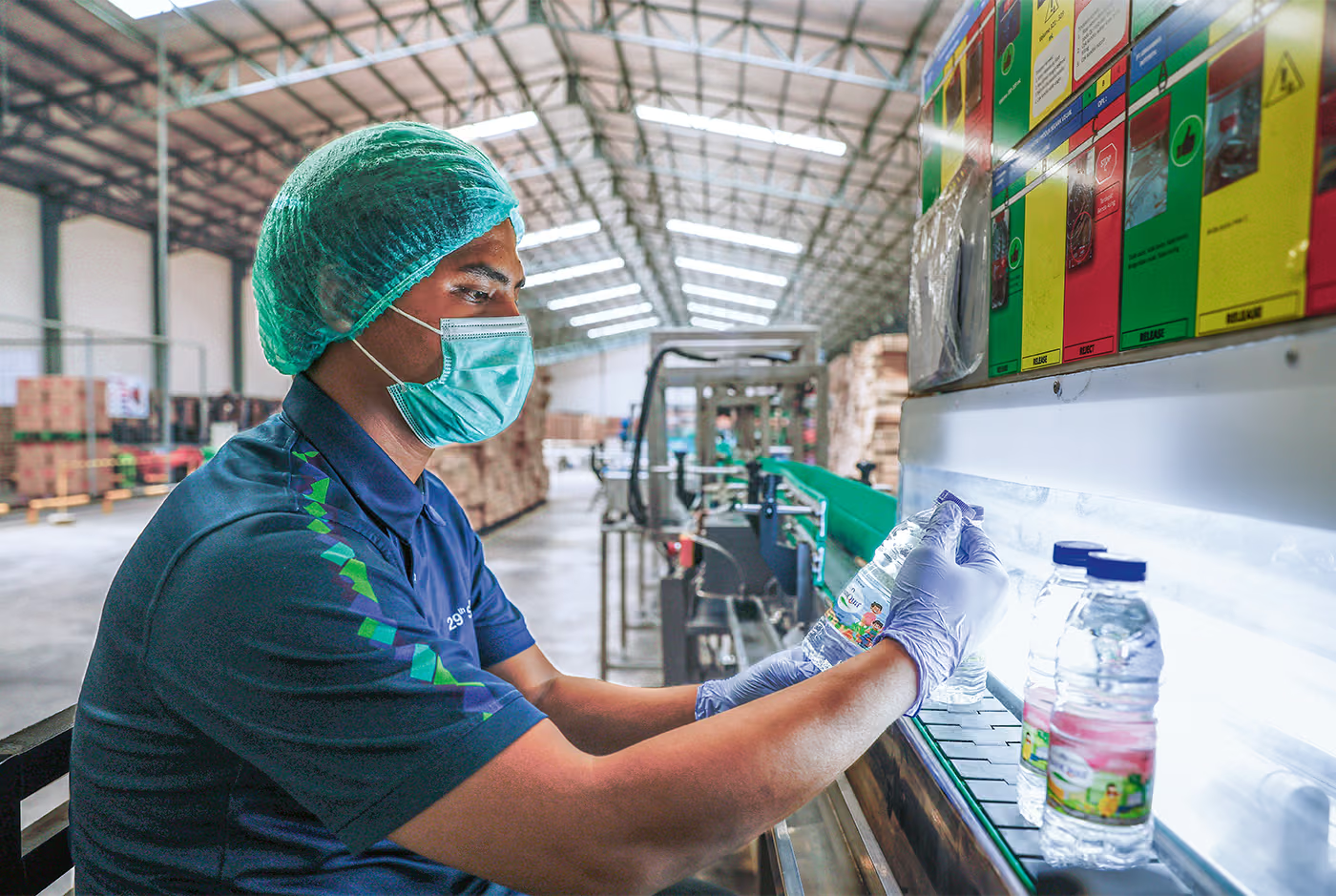
With nearly 3,000 employees, SanQua covers the entire value chain from preforms to filling and distribution.
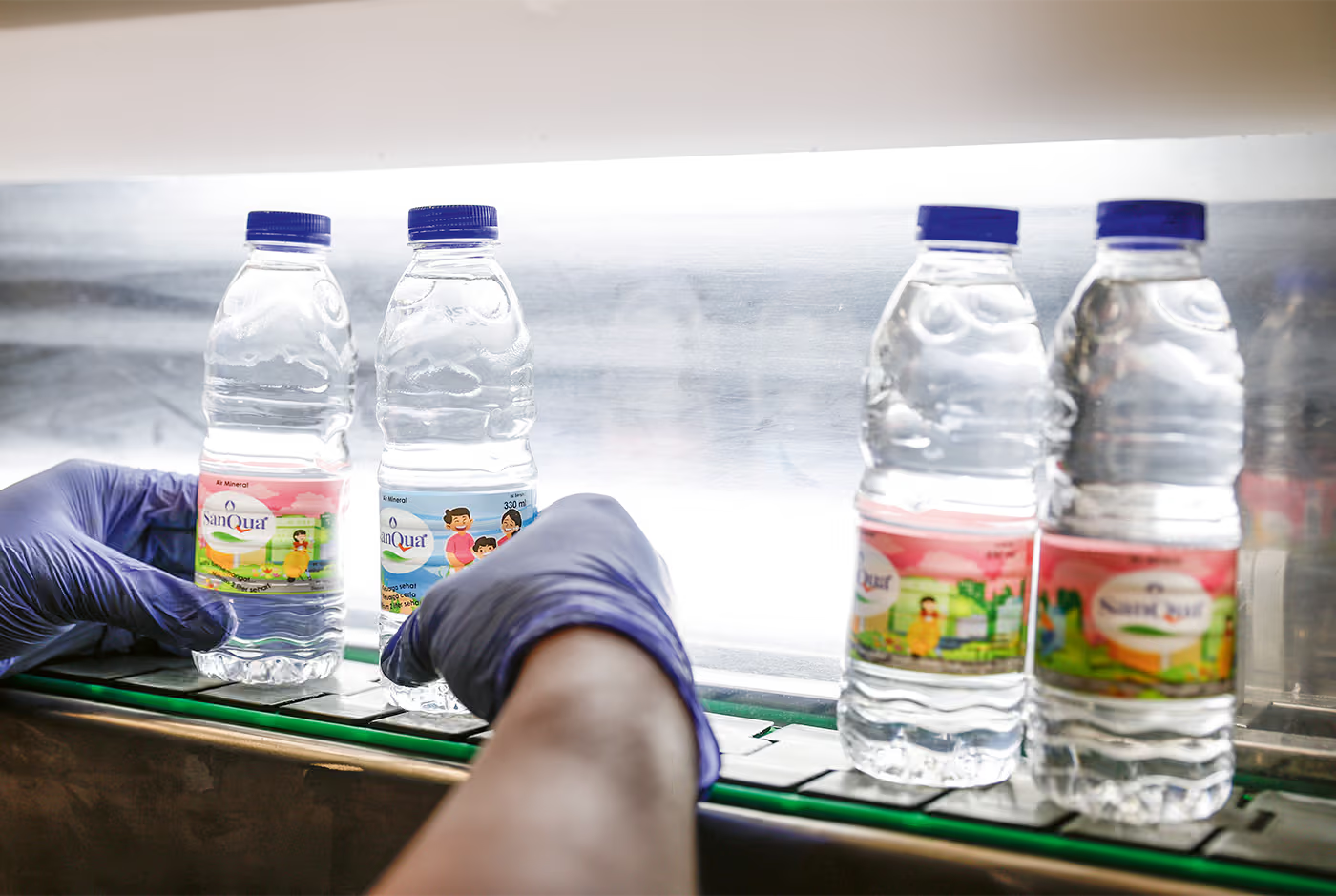
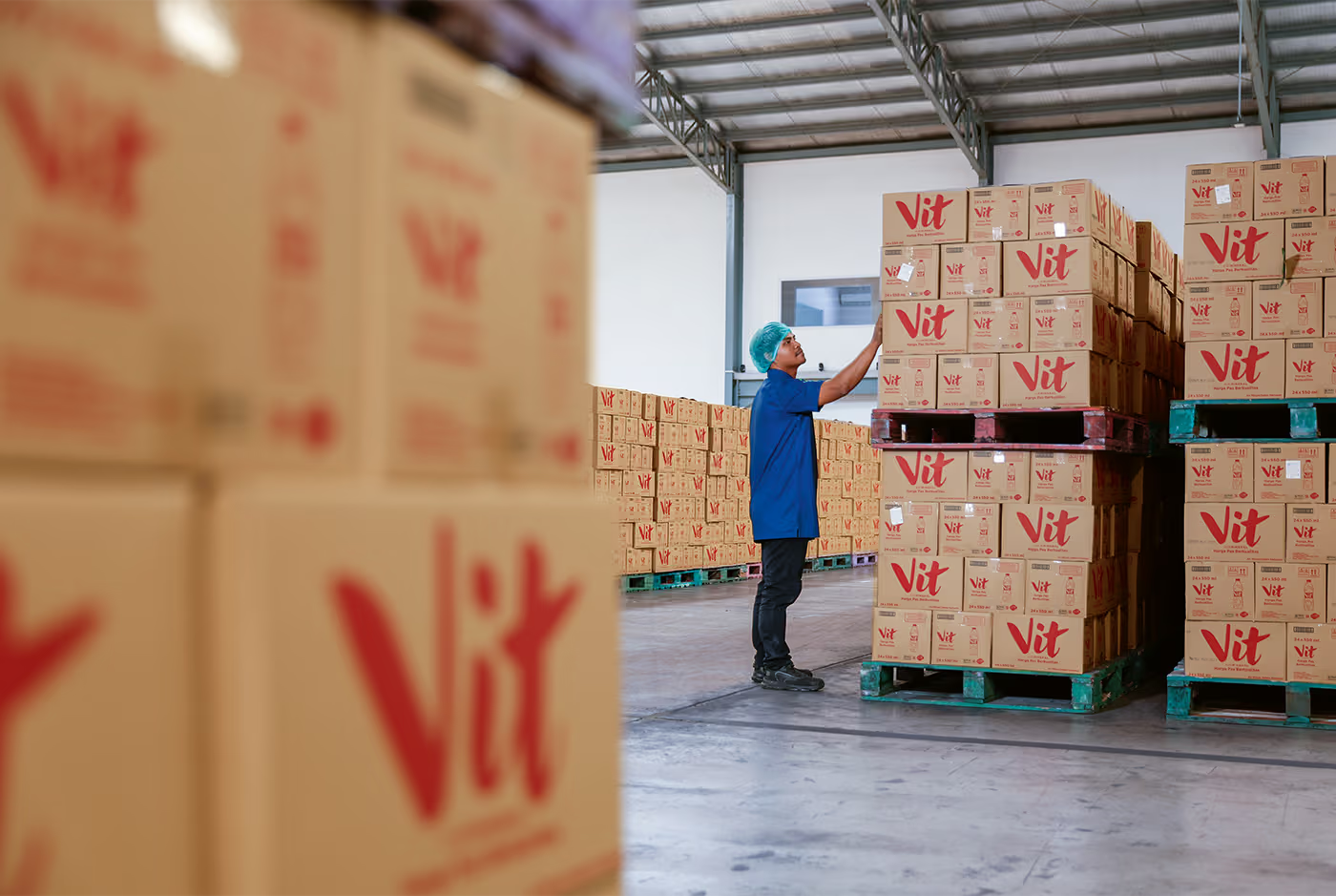
Six locations across Indonesia ensure just-in-time delivery and minimal inventory levels.

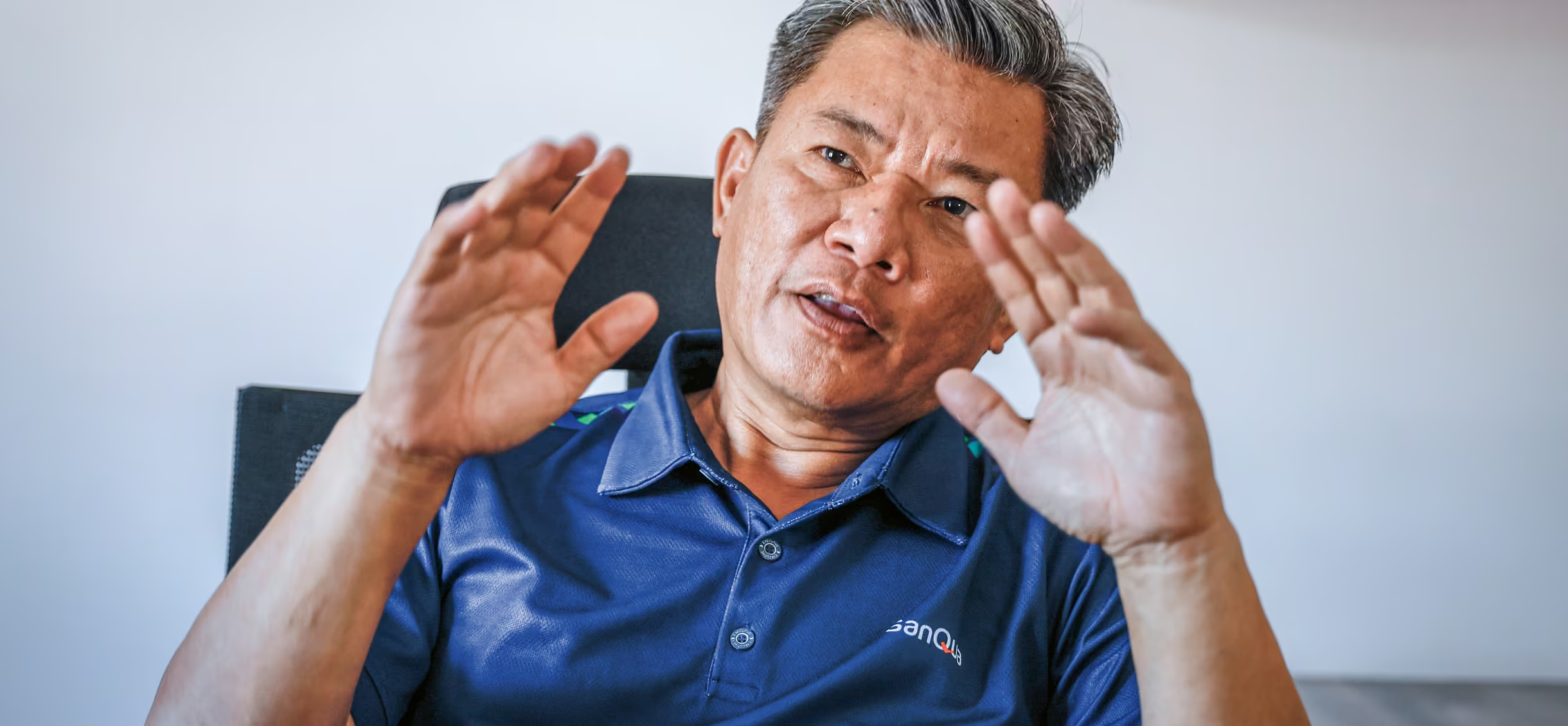
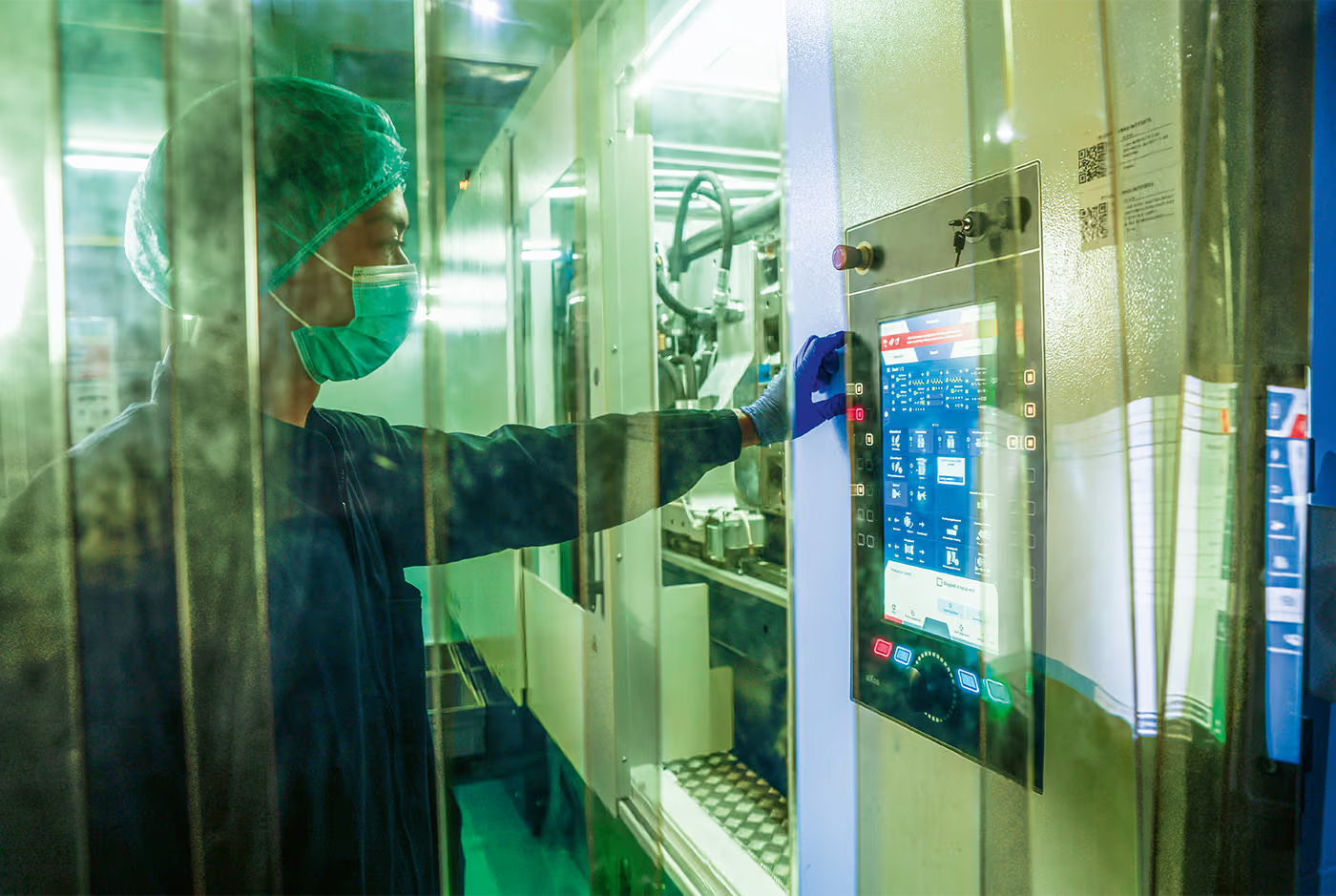
CEO Tanto Hariyadi keeps a close eye on production so that he can understand all the variables involved.
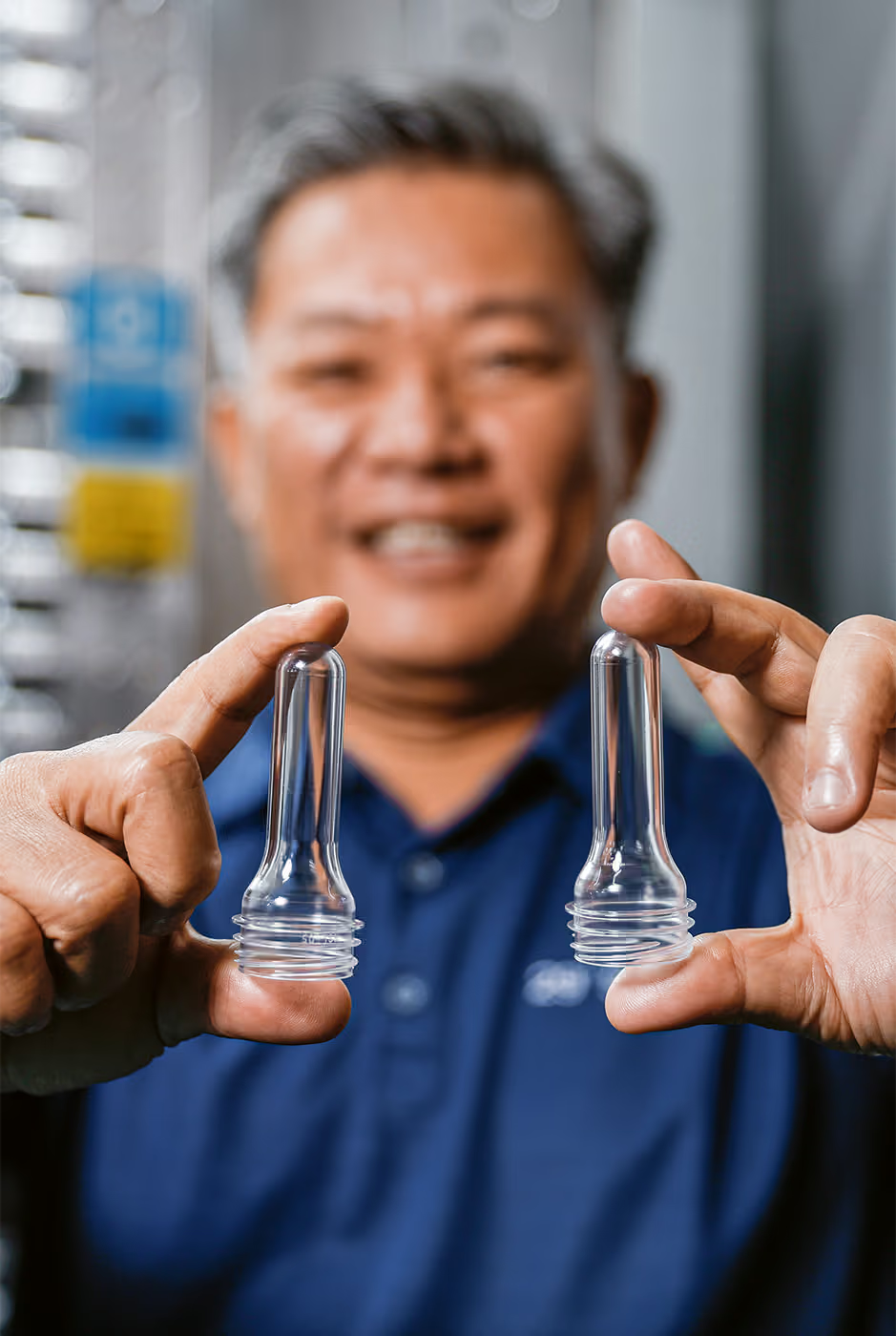
We used to produce large quantities of water cups at SanQua but our preform capacity, currently at around 160 million units, is now growing faster.
Twenty-nine years have now passed since the company was founded. What does SanQua look like today?
We currently employ 2,878 people. Our business model covers the entire value chain, from preforms to blow moulding and filling to distribution. Our preform capacity is around 160 million units, and we're naturally in the same range for closures. For a long time, we produced large quantities of water cups, but the market has shifted toward PET bottles. Today, the small bottle segment is growing significantly faster, both for our brand and in partnerships.
Proximity to the market is crucial to our success. After our first water production facility in Cinere started in 1996, plants followed in Tapos, Citeureup, Cibinong, Kuningan, Bawen and next year in Banyuwangi and Pasuruan. In 2014, we founded the distribution company PT Wahana Inti Mas in Jakarta. This production network allows us to better manage schedules and costs, boosting efficiency while supporting just-in-time delivery and minimising inventory levels.
How has the water business developed in Indonesia, and what trends are you observing?
The market is growing from a low base. In Southeast Asia, per capita PET consumption is still considered low. According to our data, we are at about one-third of Thailand's level. With increasing purchasing power and greater awareness of water quality, demand is shifting from cups to small-format PET bottles. Therefore, we see substantial potential to diversify our product offerings and better meet evolving market needs.
Is the use of rPET an issue in Indonesia?
We are committed to expanding recycling initiatives within our company; however, we have no plans to use recycled PET (rPET) in applications where packaging comes into direct contact with food or beverages. I see strong potential for non-food applications, such as pallets or other components. However, for any packaging that comes into direct contact with food or beverages, I will continue to use virgin materials until the quality of recycled materials is fully assured.
Your customers include renowned brands like Danone. Why do they choose SanQua?
We consistently deliver on Danone’s expectations in terms of volume, product quality, service excellence, cost competitiveness and continuous improvement. We also regularly undergo quality audits. In the beginning, they challenged us. Today, they support us in continuously improving our processes, food safety and reliability. The mechanism is simple: good performance is rewarded with volume, while poor performance generates headwinds. This creates a virtuous circle of ambition and trust. Overall, we operate at a level that meets international benchmarks.
We hear that you can still operate every machine today. Why is staying so close to production important to you?
Theoretically, yes, but I stay out of the day-to-day business. On the other hand, all developments and investments pass my desk. I want to understand every system, from setup to target cycle time and compressed air window to the cost per carton. Once a quarter, I dig deep into the numbers. If a production line light turns red, I'm heading to the production hall. It's not about assigning blame. I want to understand the root cause so that a suitable solution can be found. This proximity contributes to my credibility, binds the team and has a direct impact on staff turnover, which is below 0.01 per cent. That's not an advertising slogan, but the result of respect, clear goals and a fair share in the company's success. It's all about trust. The factories budget on their own. Once I approve the budget, management returns entirely to them.
You question many technical issues internally. What motivates you to do this?
Success requires a deep understanding of every variable. We calculate the full cost of our process – from raw materials to final delivery to the end consumer – because we believe customers shouldn’t bear the burden of inefficiencies. This mindset drives clarity in decision-making and creates competitive advantages in our daily operations.
What requirements do you have for mould technology, and which aspects are particularly important?
Stability and repeatability are more important to me than theoretical maximum values on a data sheet. A mould that theoretically manages 2,000 cycles per hour but stops after two hours is no use to me. I need robust processes, low shot weights, low scrap rates and interfaces that don't restrict me. I fundamentally reject technical locks that shut down machines based on licences, passwords or IP. Trust doesn't develop when systems are stopped simply because contracts expire. What we need are open and powerful systems that enable continuous production. If our calculations no longer work, we are also prepared to invest in new equipment.
What did you know about Otto Hofstetter AG before you contacted their people?
Otto Hofstetter AG's reputation is well-known throughout the industry. For me, it was crucial to learn that they actually listen to prospective customers and discuss solutions, not just push their products. Unfortunately, that's not always the case. Other suppliers try to bind their customers through proprietary systems. That's not a basis for a trusting collaboration. At Otto Hofstetter AG, I experienced openness, professional exchange and respect for our needs. Even if there's no order pending, we receive useful information. This creates a foundation on which projects can be set up smoothly and jointly supported.
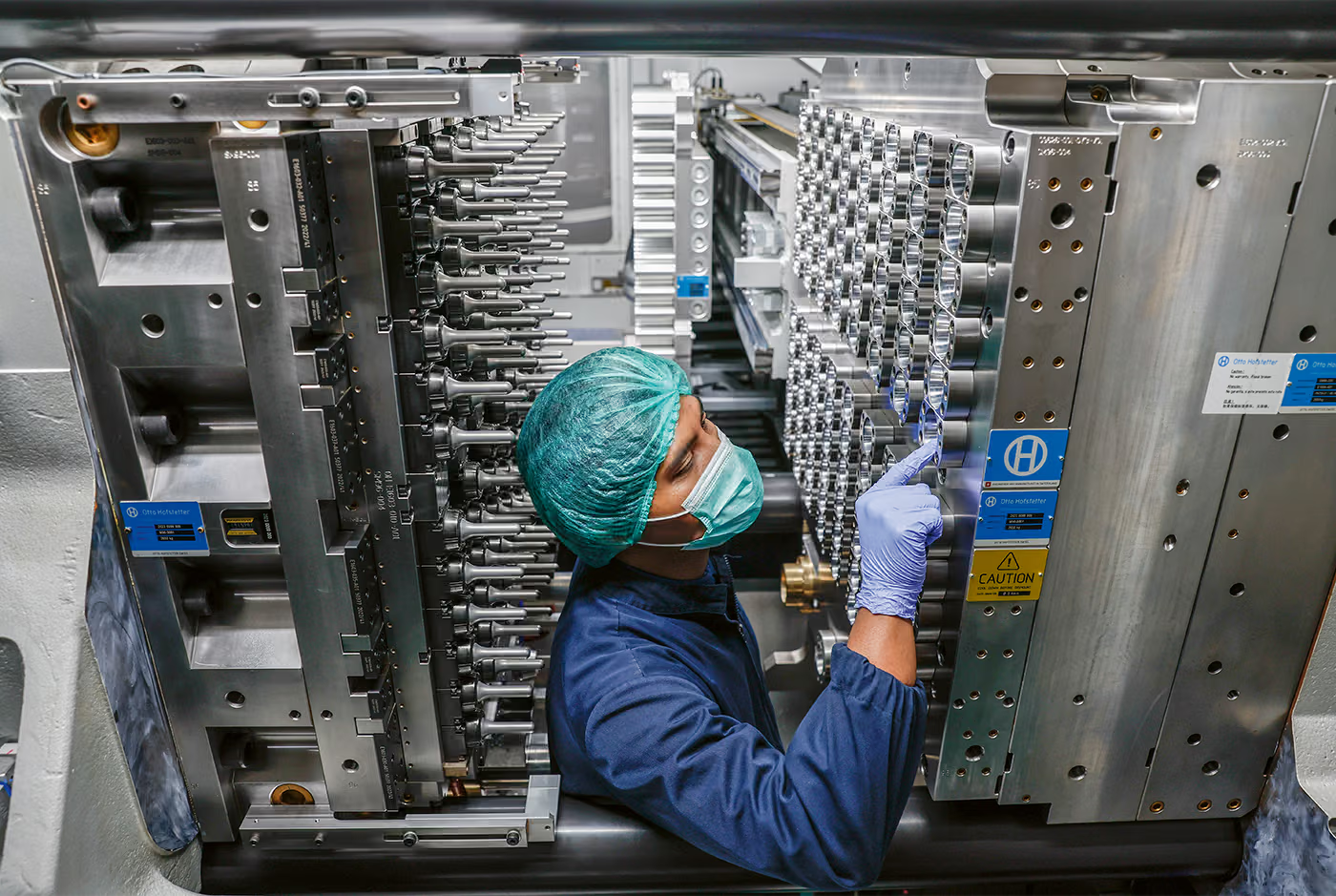
In 2024, you purchased your first 96-cavity side-entry mould from Otto Hofstetter. What led to this decision?
The relationship had been established for some time – always professional, never pressured. When the timing was right, the options presented aligned with our goals for quality, performance and service. As I don’t rely solely on data sheets, the first mould had to validate what the paper claimed. If it delivered, the next steps would follow naturally. This kind of trust isn’t built in a year, but through time and transparency.
Otto Hofstetter AG is the only supplier to use the Cavity Lock system for its moulds. What do you see as its advantages?
The precise guidance and secure centring of the cavities increases precision, reduces wear and enables shorter cycle times. When considering alternative locking systems, service life, reliability and the effect on the process window were crucial for us. In the end, what matters is how smoothly the demoulding process runs and how stable the weights remain. This is precisely the standard I use to evaluate such a system.
Tanto Hariyadi, founder and CEO of SanQua
How did you experience the process from initial discussions to startup?
It was streamlined, clear and accessible. There's no additional reporting line or process involvement, which only results in responsibility being partially delegated to too many people. This simplified communication avoids misunderstandings, acceptance procedures run smoothly and contacts are available when needed. Otto Hofstetter AG is lean and therefore effective.
The 96-cavity side-entry mould from Uznach has been running for several months now. What's your interim assessment?
The mould is running smoothly and preform quality is consistent. There have been no unexpected incidents during bottle blowing or demoulding so far. The reject rate during blowing and filling remains at our low level or even slightly lower. Overall, our productivity remains stable or is even increasing. This is exactly what I expect from a mould that is part of a complete production chain. Our advantage is that we can see the entire process, from preforming to blowing to filling, and can make adjustments throughout the entire process.
How would you rate the service and support provided by the Otto Hofstetter AG team?
Since the mould has only been running for a few months, I can't yet look back on a very long collaboration. So far, Otto Hofstetter AG’s team has been very reliable and knowledgeable. Topics are shared proactively, even if there is no immediate order pending. This type of support reduces my operational risk. It also builds trust because you don't feel like it's all about getting the order done quickly. For me, it's crucial that I talk to people who listen to me and offer solutions.
Where do you see potential for optimising collaboration?
I'll have to really think about that. Perhaps it would be interesting to define common standards for process and quality data so that the learning curve in our company can be a bit steeper. Furthermore, forward-looking spare parts planning for peak times could prove valuable. And more investment by Otto Hofstetter AG in remote diagnostics would make sense, too. However, only as long as it doesn't impose any restrictions on us as plant operators. I welcome openness, but I strictly reject restrictions. That's my philosophy.
What should a company pay attention to when investing in a new mould?
Fundamentally, every company and every task is different. Generally speaking, they should clearly define their goals and openly address any problems they may have. It's important to buy a proven solution and not settle for data sheets. Testing whether the mould actually performs in a company’s existing system is essential. Furthermore, it's advisable to ensure fairness and avoid becoming vendor-dependent. If the vendor listens and is present during commissioning, that's a good sign.
Where do you see SanQua in five to seven years?
Size is not an end in itself. Indonesia is growing, and so is our market. We're aiming for around ten per cent in Java. We're not wasting our energy trying to take market share away from competitors, but rather growing with the market. Nationally, we currently have a share of around three per cent, and in Java, six to seven per cent. Our focus is on asserting ourselves in the market, delivering reliably and being ready when opportunities arise. If others act inefficiently, we're ready to step in. That's why we keep our production and supply chain robust, invest closely with the market and remain capable of acting.
What advice do you give young people who start out with limited resources?
First, it's essential to build confidence and understand the numbers inside out: every metre, every gram, every kilowatt hour matters. A lean organisation and consistent reinvestment of profits are key to long-term resilience. In the early stages, opportunity takes precedence and risk is secondary. But once a company is operating smoothly and accountable to both employees and customers, that balance shifts – caution becomes critical in major decisions, while courage is needed in daily execution. This approach ensures stability and preserves the freedom to act decisively.
Mr Hariyadi, thank you very much for this open discussion. We wish you every success in implementing your plans, and we look forward to continuing our journey together.